Water Jet Cutting Machines: Insights Into CNC Industrial Cutting Technology
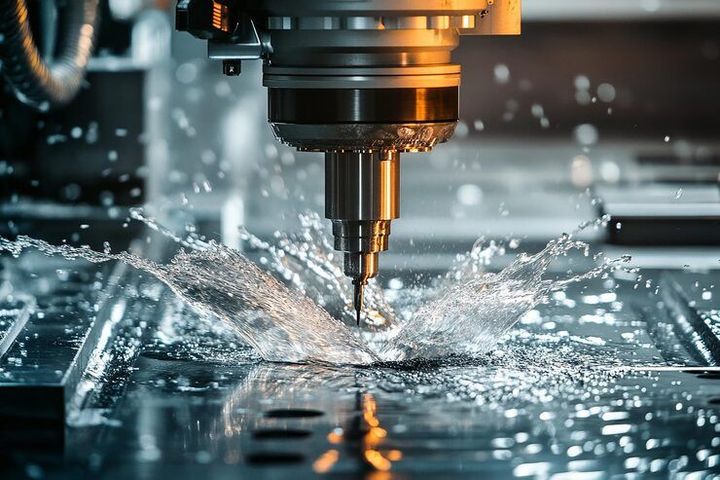
Water jet cutting machines are CNC industrial cutting systems that use a very high-pressure stream of water to cut materials into specific shapes. Depending on the application, the water stream may be combined with an abrasive material to improve cutting performance on hard materials.
Unlike many conventional cutting methods, water jet technology does not rely on a heated cutting edge. This makes it useful for materials that may be affected by heat during manufacturing.
A typical water jet cutting system includes several important components:
- High-pressure pump
- Cutting head
- Abrasive delivery system
- CNC control unit
- Cutting table
- Water collection tank
- Motion control system
- Nozzle and orifice assembly
The CNC controller converts a digital drawing into machine movements. The cutting head then follows the programmed path to produce the required shape.
Water jet cutting technology is widely associated with precision manufacturing, metal fabrication, aerospace components, architectural materials, automotive parts, stone processing, and industrial engineering.
There are two major approaches. Pure water jet cutting is generally used for softer materials, while abrasive water jet cutting is suitable for harder materials such as steel, aluminum, titanium, stone, ceramics, and composites.
How CNC Water Jet Cutting Technology Works
The process begins with a digital design. The design may be prepared using CAD software and then converted into machine-readable instructions.
A high-pressure pump forces water through a small orifice. The resulting jet travels toward the workpiece at high velocity. In abrasive systems, abrasive particles are introduced into the stream to increase the cutting ability.
The CNC motion system controls the movement of the cutting head along programmed X, Y, and sometimes Z axes.
The basic process can be summarized as:
- Prepare the digital design.
- Select the appropriate material settings.
- Position the workpiece on the cutting table.
- Set water pressure and cutting parameters.
- Introduce abrasive material when required.
- Start the CNC cutting program.
- Monitor the cutting process.
- Inspect the finished component.
The final result depends on factors such as material thickness, nozzle condition, cutting speed, abrasive flow, machine accuracy, and the required edge quality.
Why Water Jet Cutting Matters in Modern Manufacturing
Water jet cutting has become important because modern manufacturing increasingly requires flexible CNC machining, complex shapes, material efficiency, and controlled production processes.
The technology can cut many materials without creating a conventional heat-affected zone associated with thermal cutting methods. This can be valuable when material properties need to be preserved near the cut.
Water jet systems can also handle intricate profiles and internal shapes. This makes them useful for prototypes, customized components, industrial parts, architectural patterns, and small or large production batches.
The technology is particularly relevant to industries working with difficult-to-machine materials.
Common applications include:
- Aerospace component manufacturing
- Automotive component production
- Industrial machinery fabrication
- Metal sheet processing
- Stone and ceramic cutting
- Glass processing
- Composite material cutting
- Architectural fabrication
- Electrical equipment components
- Precision engineering
For manufacturers, CNC water jet cutting can also support digital production workflows because designs can move from CAD systems to machine control with relatively few manual steps.
Water Jet Cutting Compared With Other CNC Cutting Methods
Different industrial cutting technologies are suitable for different materials and production requirements.
| Technology | Main Cutting Method | Common Materials | Key Characteristic |
|---|---|---|---|
| Water Jet | High-pressure water | Metal, stone, glass, composites | Minimal thermal influence |
| Laser Cutting | Focused laser beam | Metals and selected materials | High-speed precision |
| Plasma Cutting | Ionized gas | Conductive metals | Effective for thicker metal |
| CNC Milling | Rotating cutting tools | Metals, plastics, composites | Cutting and shaping |
| Mechanical Sawing | Physical cutting tool | Metals, plastics, wood | Straight and general cutting |
Water jet technology is not automatically the best choice for every application. Material type, thickness, geometry, production volume, edge requirements, and machine configuration should all be considered.
Recent Trends in CNC Water Jet Cutting Technology
Recent developments in industrial manufacturing are increasingly focused on automation, digital control, energy awareness, process monitoring, and production efficiency.
One important trend is the integration of advanced CNC controls. Modern systems can use digital cutting programs that help coordinate movement, speed, and cutting parameters.
Automation is another important development. Material handling systems, automatic positioning, software-based nesting, and production monitoring can reduce manual intervention.
Digital nesting is especially useful because multiple components can be arranged within a sheet or plate before cutting. This can help improve material utilization.
Another trend is the use of software-assisted process planning. Modern software can calculate cutting paths, estimate machining time, manage part layouts, and help operators select suitable parameters.
During 2025 and 2026, broader manufacturing trends have also emphasized smart factories, industrial automation, connected equipment, predictive monitoring, and digital production records. These developments are influencing how CNC cutting equipment is integrated into larger manufacturing systems.
Water jet technology is also gaining attention for composite and advanced-material processing because non-thermal cutting can be useful where excessive heat may affect material characteristics.
Laws, Safety Rules, and Industrial Policies
Water jet cutting machines operate with extremely high-pressure water and may also use abrasive particles. Appropriate machine safety procedures are therefore essential.
Regulatory requirements vary by country.
In the United States, OSHA machine-guarding requirements include provisions designed to protect workers from hazardous machine operations and moving components. OSHA's general machine-guarding framework includes requirements for safeguarding points of operation and hazardous machinery areas.
Employers should also consider procedures for controlling hazardous energy during maintenance and repair activities. Appropriate training, guarding, inspection, and operating procedures are important parts of a workplace safety program.
In the European Union, Regulation (EU) 2023/1230 establishes a modern machinery-safety framework. The regulation is scheduled to apply from 20 January 2027, with certain provisions applying earlier. An amendment adopted in 2026 also affects the regulatory framework.
For manufacturers and industrial users, compliance should be evaluated according to the country or market in which the machinery is manufactured, installed, or operated.
Important safety considerations include:
- Appropriate machine guarding
- Emergency stopping controls
- Pressure-system inspection
- Safe abrasive handling
- Operator training
- Personal protective equipment
- Electrical safety
- Lockout and energy-isolation procedures
- Regular inspection of hoses, nozzles, and other components
Regulations can change, so organizations should verify current requirements with the appropriate national workplace-safety or machinery authority.
Tools and Resources for Water Jet Cutting
Several categories of tools can help users understand and plan CNC water jet cutting processes.
CAD and CAM software:
These tools help create component drawings, prepare cutting paths, and convert designs into machine instructions.
Nesting software:
Nesting programs arrange multiple parts on a sheet to improve material utilization and simplify production planning.
Cutting parameter calculators:
These tools can help estimate suitable cutting conditions based on material type, thickness, nozzle configuration, and abrasive settings.
CNC simulation tools:
Simulation software can help identify tool paths, movement problems, collisions, or programming errors before physical cutting.
Maintenance checklists:
Digital or printed checklists can help track inspections of pumps, cutting heads, hoses, nozzles, abrasive systems, and electrical components.
Safety training resources:
Workplace safety manuals, machine operating instructions, regulatory guidance, and training materials can help operators understand hazards and safe operating practices.
Key Factors When Evaluating CNC Water Jet Cutting
Selecting a suitable system requires more than looking at maximum pressure or machine size.
Important technical factors include:
- Maximum cutting area
- Material thickness capability
- CNC axis configuration
- Positioning accuracy
- Pump configuration
- Cutting head design
- Abrasive management
- Nozzle technology
- Software compatibility
- Water management
- Maintenance requirements
- Safety features
- Automation options
The correct configuration depends on the intended application. A system designed primarily for thin sheet metal may have different requirements from equipment intended for thick stone, composite panels, or heavy industrial components.
Frequently Asked Questions
What is a water jet cutting machine?
A water jet cutting machine is a CNC system that uses a high-pressure water stream to cut materials. Abrasive particles may be added when cutting harder materials.
Can water jet machines cut metal?
Yes. Abrasive water jet systems can cut many metals, including steel, aluminum, titanium, and other engineering materials. The appropriate configuration depends on material type and thickness.
Does water jet cutting create a heat-affected zone?
Water jet cutting is a non-thermal cutting process, so it does not create the same heat-affected zone associated with thermal methods such as laser or plasma cutting.
What is the difference between pure and abrasive water jet cutting?
Pure water jet cutting generally uses only high-pressure water and is suited to softer materials. Abrasive water jet cutting introduces abrasive particles and is suitable for harder materials.
Is CNC required for water jet cutting?
Modern industrial water jet systems commonly use CNC controls to automate movement and follow complex digital cutting paths. Basic or specialized systems may have different control configurations.
Conclusion
Water jet cutting machines are an important part of modern CNC industrial cutting technology. By combining high-pressure water, abrasive materials when needed, precision motion control, and digital programming, these systems can process a wide range of industrial materials.