Automated Leak Testing Systems: An Overview of Methods and Equipment
Automated leak testing systems are industrial testing arrangements designed to identify unwanted gas or liquid movement through a product, container, pipe, or sealed component. They use sensors, pressure controls, measurement instruments, and software to evaluate whether a component meets defined leakage limits.
These systems are widely used in manufacturing environments where product sealing, pressure retention, and fluid containment are important. Examples include automotive components, medical devices, electronic enclosures, industrial valves, pumps, and packaging equipment.
A leak may occur because of a damaged seal, a manufacturing defect, a crack, a poorly fitted joint, or an uneven surface. Even a small leak can affect product performance, reliability, and safety.
Traditional leak testing often depends on manual inspection. Automated equipment can make the process more consistent by controlling test conditions, recording measurements, and identifying components that do not meet specified requirements.
Why Does Automated Leak Testing Exist?
Modern products frequently contain liquids, gases, pressurized air, or sensitive internal components. Manufacturers need reliable ways to confirm that these products maintain their intended level of containment.
Automated leak testing addresses several common challenges:
Detecting small leaks that may be difficult to identify visually.
Applying repeatable test conditions across production batches.
Reducing dependence on subjective manual inspection.
Recording results for quality assurance and traceability.
Identifying manufacturing problems before products reach their intended users.
The purpose is not simply to find leaks. It is also to establish whether a component performs within its defined technical limits.
Importance of Automated Leak Testing in Modern Manufacturing
Product Quality and Reliability
Leak testing plays an important role in maintaining consistent manufacturing quality. A poorly sealed component may allow moisture, air, fuel, coolant, or other substances to escape or enter an enclosed space.
For example, a leak in an automotive cooling component can affect temperature control. A leaking electronic enclosure may allow moisture to damage internal circuits. In medical equipment, leakage can interfere with the intended function of a device.
Automated testing helps manufacturers identify these problems through measurable acceptance criteria rather than relying only on visual checks.
Workplace and Environmental Safety
Some industrial products contain flammable gases, corrosive liquids, or other substances that require careful containment. Detecting leaks can help reduce the likelihood of exposure, equipment damage, and environmental release.
However, leak testing alone does not guarantee safety. Appropriate equipment design, maintenance, operating procedures, and additional inspections may also be necessary.
Industries That Use Leak Testing Equipment
| Industry | Typical applications | Main testing objective |
|---|---|---|
| Automotive | Fuel systems, radiators, valves | Verify fluid and gas containment |
| Medical manufacturing | Containers, tubing, sealed devices | Check package or device integrity |
| Electronics | Protective housings, sensors | Assess resistance to unwanted ingress |
| Aerospace | Fuel lines, pressure components | Evaluate containment and integrity |
| Food and beverage | Sealed containers, packaging | Check package integrity |
| Industrial machinery | Pumps, cylinders, hydraulic assemblies | Identify unwanted leakage |
The appropriate test depends on the product design, operating conditions, materials, and applicable acceptance criteria.
Common Methods Used in Automated Leak Testing
Pressure Decay Testing
Pressure decay testing is one of the commonly used methods for checking sealed components.
The system introduces air or another suitable test gas into the component and raises its pressure to a specified level. After stabilization, the equipment monitors pressure changes over a defined period.
A pressure reduction may indicate leakage, although temperature changes, material expansion, and fixture leakage can also influence the result.
This method is often used for valves, housings, containers, and sealed industrial assemblies.
Vacuum Decay Testing
Vacuum decay testing works by creating a controlled vacuum inside a test chamber or component. The system then monitors changes in vacuum pressure.
If air enters through an unintended opening, the pressure may rise. The measured change is compared with established acceptance limits.
This method can be useful for sealed packages, electronic components, and products that can tolerate the specified vacuum conditions.
Mass Flow Testing
Mass flow testing measures the quantity of gas passing through a test arrangement under controlled conditions.
The equipment can detect leakage by comparing measured flow against a defined threshold. It is particularly useful when the test process requires a direct measurement of gas flow rather than relying only on pressure changes.
Applications include pneumatic assemblies, valves, regulators, and fluid-control components.
Tracer Gas Testing
Tracer gas testing uses a detectable gas to identify leakage paths. Helium is commonly used because its small molecular size and detectable properties make it useful for sensitive leak investigations.
Depending on the method, a component may be pressurized with tracer gas while a detector checks the surrounding area. Other arrangements place the component inside a chamber and measure tracer gas escaping into the chamber.
Tracer gas methods can detect very small leaks, but the equipment, test environment, and operating procedure must match the required sensitivity.
Bubble Testing and Liquid-Based Methods
Bubble testing involves applying a suitable liquid to a suspected leakage area or immersing a component under controlled conditions. Escaping gas produces visible bubbles.
This method is relatively straightforward and can help locate leakage points. However, it may require manual observation and may not provide the same level of automated measurement as pressure, flow, or tracer gas systems.
Liquid-based methods must be selected carefully because some products can be damaged by moisture or contamination.
Main Equipment Components
An automated leak testing system generally combines several components that work together.
Pressure or vacuum regulators: Establish the required test conditions.
Pressure transducers: Measure pressure changes during the test.
Mass flow sensors: Measure gas flow where required.
Tracer gas detectors: Identify specific gases during sensitive testing.
Test fixtures: Hold and seal the component under examination.
Control units: Coordinate valves, sensors, and testing sequences.
Programmable controllers: Manage automated operations and interlocks.
Data recording software: Stores results and supports quality analysis.
Operator interfaces: Display test parameters, results, and system status.
The selection of equipment depends on the component's dimensions, materials, production volume, expected leak rate, and test requirements.
Recent Technology Trends in Leak Testing
Digital Monitoring and Data Collection
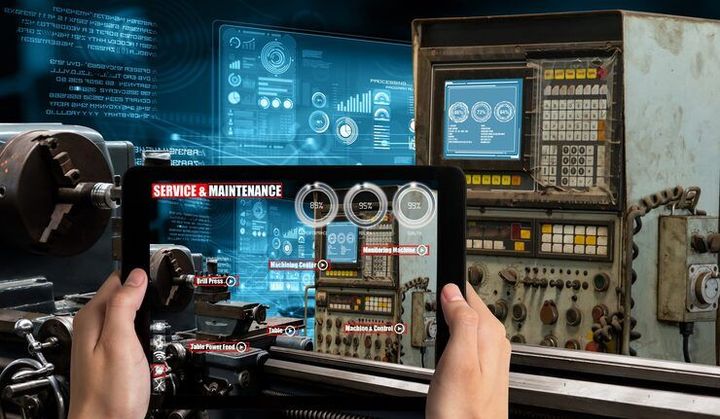
Manufacturing systems increasingly use digital monitoring to record test measurements and connect results with production information. These records can help identify repeated failures, compare production batches, and support investigations into quality problems.
Digital traceability is especially useful when manufacturers need to demonstrate that products passed defined inspection procedures.
Integration With Automated Production Lines
Leak testers can be integrated with robotic handling, conveyor systems, and automated assembly equipment. Components can move through testing stations with less manual handling.
Such integration can support consistent test sequences, automatic identification of failed components, and communication between inspection equipment and production controls.
Smarter Analysis and Predictive Maintenance
Data analysis tools can help engineers identify patterns such as gradually changing pressure readings, repeated fixture leakage, or increasing rejection rates.
Machine learning may support anomaly detection when sufficient reliable data is available. However, these tools do not automatically replace validated test procedures or engineering judgment.
Developments During 2025–2026
Recent industrial development has continued to emphasize connected manufacturing, improved sensor integration, traceable inspection data, and automation. These trends are relevant to leak testing because measurement consistency and production monitoring are central to reliable quality control.
Specific equipment capabilities and regulatory requirements vary by application. Any claimed improvement in sensitivity, throughput, or measurement accuracy should be verified against technical documentation and independent validation rather than assumed from the use of newer technology.
Laws, Regulations, and Technical Standards
Product-Specific Requirements
Leak testing requirements depend on the product, its intended use, the country of manufacture, and the market where it will be used. There is no single universal leak test that applies to every industrial component.
Manufacturers may need to consider pressure equipment rules, environmental requirements, workplace safety regulations, and sector-specific standards.
International Standards and Quality Frameworks
Several established frameworks may be relevant:
ISO 9001: Provides a quality management framework for consistent processes, documented procedures, and continual improvement.
ISO 13485: Addresses quality management systems for medical device manufacturing.
ISO 20485: Covers non-destructive testing using leak testing methods and tracer gases.
ASME Boiler and Pressure Vessel Code: Contains requirements relevant to certain pressure equipment and related inspections.
IEC 60529: Defines degrees of protection provided by enclosures, commonly expressed through IP ratings.
These standards have different scopes. For example, an enclosure's IP rating does not automatically establish its compliance with every leak-tightness requirement.
Considerations in India
In India, manufacturers may need to review applicable provisions of the Bureau of Indian Standards, the Legal Metrology framework where relevant, environmental legislation, and rules governing particular types of pressure equipment.
The applicable requirements depend on the product category and its use. Manufacturers should confirm the current rules, relevant standard editions, and any required approvals before defining a compliance program.
Tools and Resources for Leak Testing
Engineering and Measurement Tools
Several general-purpose resources can help engineers plan and evaluate leak testing.
Pressure measurement instruments: Monitor pressure and vacuum changes during testing.
Flow measurement instruments: Quantify gas movement through a test arrangement.
Calibration equipment: Helps verify measurement performance against suitable reference standards.
Data analysis software: Supports trend analysis, measurement comparisons, and defect investigations.
Statistical process control templates: Help track variations in test results over time.
Maintenance checklists: Support routine inspection of sensors, fixtures, seals, and pneumatic connections.
Technical documentation templates: Record test procedures, acceptance limits, equipment settings, and inspection outcomes.
Choosing a Suitable Testing Method
Before selecting a system, engineers should define the component's allowable leak rate, operating pressure, material compatibility, production requirements, and testing environment.
They should also evaluate measurement uncertainty, repeatability, test duration, fixture sealing, and the consequences of a false pass or false failure.
A suitable testing plan should include calibration, routine verification, documented procedures, and periodic review of test results.
Frequently Asked Questions
What Is the Main Purpose of an Automated Leak Testing System?
Its main purpose is to detect and measure unwanted leakage in components or sealed assemblies. It helps manufacturers check whether products meet specified containment and quality requirements.
Which Leak Testing Method Is Most Accurate?
There is no single most accurate method for every application. Tracer gas testing can detect very small leaks in suitable conditions, while pressure decay and mass flow testing may be more appropriate for other products. Accuracy depends on the equipment, test setup, calibration, and measurement conditions.
Can Automated Leak Testing Detect Very Small Leaks?
Yes, certain systems can detect very small leakage rates. The achievable sensitivity depends on the method, component design, test conditions, instrument performance, and surrounding environment.
How Often Should Leak Testing Equipment Be Calibrated?
Calibration frequency depends on equipment specifications, usage, measurement risk, applicable standards, and the manufacturer's documented procedures. Regular verification and maintenance are important for maintaining dependable measurements.
Is Automated Leak Testing Suitable for Every Industry?
Many industries use automated leak testing, but not every product requires the same approach. The method must be appropriate for the component, the substances it contains, its operating conditions, and the relevant technical requirements.
Conclusion
Automated leak testing systems are important tools for checking the integrity of manufactured components, sealed packages, and pressure-containing assemblies. Methods such as pressure decay, vacuum decay, mass flow, tracer gas detection, and bubble testing serve different purposes and offer different levels of sensitivity.