Thermal Cure Coating Guide: Understanding Heat-Cured Coating Technology
Thermal cure coating is a finishing technology in which a coated material is exposed to controlled heat so the coating can develop its final physical and chemical properties. The process is widely associated with industrial metal finishing, appliances, automotive components, machinery, electrical equipment, and other manufactured products.
coatings that rely mainly on air drying, thermal curing uses temperature and time as important parts of the finishing process. Heat activates chemical reactions within the coating system. Depending on the formulation, this can create cross-linking between components and produce a harder, more stable coating film.
Common thermal curing systems include powder coatings and some liquid coating technologies. The exact curing temperature and duration depend on the coating chemistry, substrate, coating thickness, and equipment.
A typical thermal curing process includes:
- Surface preparation
- Coating application
- Controlled heating
- Curing or cross-linking
- Cooling
- Quality inspection
The objective is not simply to heat the coated part. The material needs to reach the appropriate curing conditions without damaging the substrate or affecting the coating's appearance and performance.
How Heat-Cured Coating Technology Works
A thermal cure coating normally contains components designed to react when sufficient heat is applied. During the heating stage, the coating may soften, flow, and then undergo chemical cross-linking.
The process can be understood in three basic stages:
- Application: The coating is applied to a properly prepared surface.
- Heating: The coated component enters an oven or another controlled heating environment.
- Curing: Heat activates the coating chemistry, producing the intended film properties.
Temperature measurement is particularly important. The air temperature inside an oven and the actual temperature reached by the coated part are not always identical. Industrial processes therefore use temperature-monitoring methods to confirm that the substrate reaches the required curing profile.
Importance
Why Thermal Cure Coatings Matter
Thermal cure coating technology plays an important role in industrial manufacturing because surface protection affects the useful life, appearance, and performance of many components.
A properly cured coating can provide resistance against factors such as:
- Moisture
- Corrosion
- Chemicals
- Scratching
- Wear
- Heat exposure
- Environmental conditions
The exact level of resistance depends on the coating formulation and application process. A coating should therefore be selected according to the actual operating environment rather than based only on its appearance.
Industries Using Heat-Cured Coatings
Thermal curing is relevant across many manufacturing sectors. Applications can include:
| Industry | Typical Applications |
|---|---|
| Automotive | Metal components and structural parts |
| Appliances | Panels, frames, and equipment housings |
| Machinery | Machine frames and fabricated components |
| Electrical | Enclosures and metal assemblies |
| Construction | Architectural and structural components |
| Furniture | Metal frames and fittings |
| Energy | Selected equipment and fabricated parts |
Thermal cure coatings can also support consistent production because controlled oven conditions allow manufacturers to establish repeatable curing profiles.
Performance and Energy Considerations
Energy consumption is an important consideration in industrial coating operations because curing ovens require controlled heat for extended production periods.
Modern coating processes increasingly focus on:
- Better oven insulation
- Improved temperature control
- Heat recovery
- Efficient airflow
- Accurate curing profiles
- Reduced process waste
- Lower-emission coating formulations
These improvements can support more efficient manufacturing while maintaining required coating performance.
Recent Updates
Emerging Trends in Thermal Cure Coating Technology
During 2025 and 2026, industrial coating development has continued to focus on durability, process efficiency, environmental considerations, and improved curing control.
One important direction is the development of coating systems designed to cure at lower temperatures. Lower-temperature curing can be relevant for reducing energy requirements and expanding the range of substrates that can be processed safely.
Another trend is greater attention to curing precision. Instead of relying only on the oven's displayed temperature, manufacturers increasingly use process monitoring to understand the actual temperature profile experienced by components.
Digital Process Monitoring
Industrial manufacturing is also moving toward greater use of sensors and digital monitoring. Temperature sensors, data logging, and automated process controls can help identify variations during curing.
These systems can monitor factors such as:
- Oven temperature
- Part temperature
- Heating time
- Airflow
- Temperature uniformity
- Process deviations
Data from these measurements can be used for process documentation and quality analysis.
Sustainability and Coating Development
Environmental considerations continue to influence coating technology. Research and development increasingly focuses on formulations and processes that can reduce emissions, energy demand, hazardous substances, and material waste where technically practical.
However, environmental performance depends on the complete coating system. Application method, curing temperature, formulation, pretreatment, equipment efficiency, and waste handling all contribute to the overall environmental profile.
Laws or Policies
Regulatory Considerations
Thermal cure coating operations can be affected by environmental, workplace safety, chemical-management, and waste regulations. Requirements vary significantly by country and sometimes by state, province, or local authority.
Regulations may address:
- Air emissions
- Volatile organic compounds
- Hazardous substances
- Worker exposure
- Industrial ovens
- Waste management
- Chemical storage
- Fire and workplace safety
The specific rules depend on the coating chemistry and facility conditions.
Environmental Compliance
In many jurisdictions, industrial facilities must evaluate emissions associated with coating operations. Liquid coatings may involve volatile organic compounds, while powder coating systems generally have a different emissions profile.
Manufacturers should identify the applicable environmental framework before establishing or modifying a coating process. Local authorities may also establish requirements for emission monitoring, waste handling, and operating conditions.
Workplace Safety
Heat-cure operations involve elevated temperatures and industrial equipment. Appropriate safety procedures may therefore cover:
- Oven access
- Heat exposure
- Ventilation
- Electrical equipment
- Fire prevention
- Material handling
- Emergency procedures
Safety requirements should be based on applicable national and local regulations and the equipment manufacturer's instructions.
Tools and Resources
Useful Tools for Coating Process Management
Several general tools can help users understand and manage thermal curing processes.
Temperature data loggers: These can record temperature changes throughout the curing cycle and help identify whether parts experience the intended thermal profile.
Coating thickness gauges: These instruments measure dry film thickness and can help determine whether the applied coating falls within the specified range.
Oven temperature mapping tools: These are used to examine temperature uniformity across different locations inside a curing oven.
Process checklists: A simple checklist can record surface preparation, coating application, oven conditions, curing time, inspection results, and corrective actions.
Technical data sheets: Coating manufacturers normally provide technical information describing recommended application and curing conditions. Users should consult the relevant documentation for the specific formulation.
Safety data sheets: These documents provide important information about chemical hazards, handling, storage, protective measures, and emergency procedures.
Unit and energy calculators: General engineering calculators can help with temperature conversions, heat calculations, airflow estimates, and energy analysis.
Basic Thermal Cure Process Checklist
A practical checklist may include:
- Confirm substrate preparation
- Check surface cleanliness
- Verify coating application conditions
- Measure coating thickness where required
- Confirm oven temperature
- Monitor part temperature
- Record curing duration
- Inspect appearance
- Check adhesion or other required properties
- Document process deviations
The exact inspection requirements should be established according to the coating specification and intended application.
FAQs
What is thermal cure coating?
Thermal cure coating is a coating system that uses controlled heat to activate curing reactions and develop the required film properties. It is commonly used for industrial and manufactured components.
Why is temperature important during thermal curing?
Temperature controls the chemical reactions required for curing. Insufficient or excessive heating can affect properties such as hardness, adhesion, appearance, and durability.
Is thermal curing the same as drying?
No. Drying generally refers to the removal of solvents or other volatile components, while curing involves chemical or physical changes that establish the final coating properties. Some coatings can involve both drying and curing.
What equipment is commonly used for thermal curing?
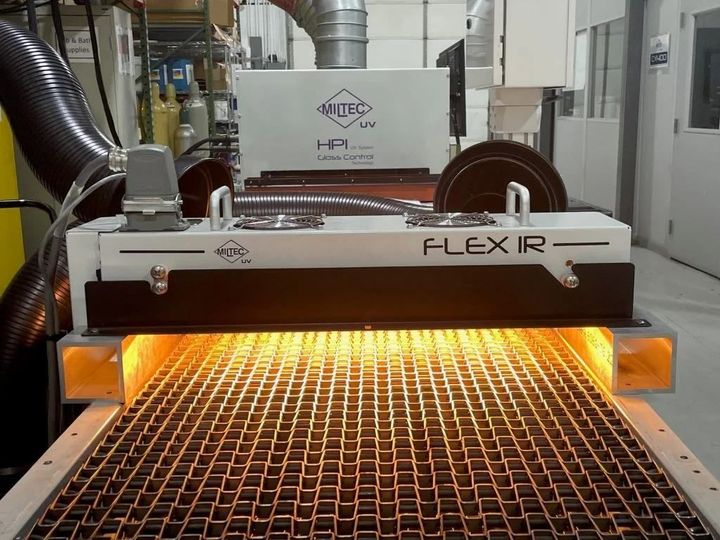
Industrial curing ovens are commonly used. Depending on the process, equipment may use different heating methods and airflow arrangements. Temperature sensors and data loggers can help monitor the curing profile.
Can thermal cure coatings be used on every material?
No. The suitability depends on the substrate, coating chemistry, required temperature, and intended operating conditions. Heat-sensitive materials may require a different coating technology or curing approach.
Conclusion
Thermal cure coating technology is an important part of modern industrial finishing. By combining coating chemistry with controlled heat, the process can create a stable film with properties suited to protection, appearance, and operational requirements.