Industrial Engineering Components: Manufacturing Process & Technology Guide
Industrial engineering components are the individual parts that work together to create machines, production equipment, automation systems, and manufacturing infrastructure. They can include shafts, gears, bearings, couplings, fasteners, brackets, housings, rollers, frames, valves, fittings, and precision-machined parts.
These components exist because modern industrial equipment depends on many precisely designed parts rather than one single structure. Each component has a specific function, such as transmitting motion, supporting loads, controlling movement, connecting assemblies, protecting internal mechanisms, or maintaining alignment.
The manufacturing process depends on the component's design, material, dimensions, operating environment, and required performance. Common production methods include machining, casting, forging, stamping, forming, welding, injection molding, and additive manufacturing.
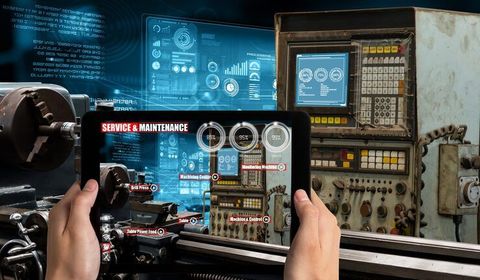
Industrial engineering also increasingly connects physical components with digital technologies. Sensors, industrial automation, artificial intelligence, machine learning, and digital twins are becoming important parts of modern manufacturing systems. A 2026 NIST roadmap highlights AI and machine learning applications across industrial data analytics, robotics, additive manufacturing, digital twins, logistics, and sustainable manufacturing.
Why Industrial Components Matter in Modern Manufacturing
Industrial components influence the reliability, accuracy, safety, and operating performance of larger machines and production systems. Even a small component can affect the movement, alignment, strength, or stability of an entire assembly.
Several industries depend heavily on engineered components, including:
- Automotive and transportation manufacturing
- Aerospace and defense production
- Semiconductor manufacturing
- Food and beverage processing
- Pharmaceutical manufacturing
- Energy and power generation
- Construction equipment
- Robotics and industrial automation
- Chemical processing
- Renewable energy equipment
Precision components are particularly important in CNC machining, robotic systems, automated assembly lines, hydraulic equipment, and high-speed production machinery.
A properly designed component can help reduce mechanical problems, improve dimensional consistency, and support predictable machine operation. Engineering teams therefore consider factors such as material strength, temperature, friction, corrosion, vibration, fatigue, tolerances, and operating loads.
Common Types of Industrial Engineering Components
Industrial components can be grouped according to their purpose.
| Component Type | Typical Function | Common Manufacturing Methods |
|---|---|---|
| Shafts | Transmit rotary motion | Turning, grinding, forging |
| Gears | Transfer motion and torque | Hobbing, milling, grinding |
| Bearings | Reduce friction | Precision machining, grinding |
| Brackets | Support assemblies | Stamping, machining, fabrication |
| Housings | Protect internal parts | Casting, machining |
| Fasteners | Join components | Cold forming, machining |
| Rollers | Support or move materials | Turning, grinding |
| Couplings | Connect rotating shafts | Forging, machining |
| Valves | Control fluid movement | Casting, machining |
| Frames | Support machinery | Welding, fabrication |
The exact manufacturing route depends on the component's geometry, material, tolerance, production quantity, and intended application.
How Industrial Engineering Components Are Manufactured
Manufacturing generally begins with engineering design. Computer-aided design software is used to create a three-dimensional model containing dimensions, tolerances, material requirements, and other technical information.
The design is then reviewed for manufacturability. Engineers consider whether the component can be produced accurately and consistently using an appropriate manufacturing process.
Material Selection
Materials are selected according to mechanical and environmental requirements. Common choices include:
- Carbon steel
- Stainless steel
- Aluminum alloys
- Copper alloys
- Titanium alloys
- Engineering plastics
- Tool steels
- Nickel-based alloys
- Composite materials
Material properties such as tensile strength, hardness, thermal resistance, corrosion resistance, density, and machinability can influence the final selection.
Machining and Precision Manufacturing
Machining removes material to create specific dimensions and geometries. CNC turning, milling, drilling, boring, grinding, and electrical discharge machining are widely used for precision components.
CNC systems can follow programmed tool paths to produce repeatable geometries. Advanced machining centers can combine multiple operations, reducing the need for repeated manual positioning.
Grinding and other finishing processes are used when tighter dimensional accuracy or improved surface characteristics are required.
Casting and Forging
Casting involves forming components by pouring molten material into a prepared mold. It is useful for complex shapes and larger components.
Forging shapes heated or otherwise prepared material through controlled mechanical force. Forged components are commonly associated with applications requiring high mechanical strength.
Fabrication and Forming
Sheet-metal components can be produced through cutting, bending, stamping, forming, and welding. These processes are widely used for machine guards, brackets, enclosures, structural frames, and equipment panels.
Additive Manufacturing
Additive manufacturing creates parts layer by layer from digital models. Metal and polymer additive manufacturing can produce complex geometries that may be difficult to manufacture through conventional processes.
NIST continues to work on additive-manufacturing standards, measurement methods, data integration, and industrialization. Its additive-manufacturing standards work includes areas involving materials, processes, terminology, applications, and testing.
Quality Control and Engineering Technology
Quality control is an important part of industrial component manufacturing. Components must be checked against engineering drawings, specifications, and applicable standards.
Typical inspection methods include:
- Dimensional measurement
- Coordinate measuring machines
- Surface inspection
- Hardness testing
- Material testing
- Non-destructive testing
- Geometric tolerance verification
- Functional testing
Modern manufacturing increasingly connects inspection equipment with digital production systems. Measurement data can be analyzed to identify process variation and potential quality problems.
Digital twins are another developing technology. A digital twin can represent a physical manufacturing system or component using synchronized digital information. NIST identifies digital twins as an important area for manufacturing transformation, with ongoing work involving interoperability, validation, measurement, and standards.
Recent Manufacturing Technology Updates
Industrial engineering is changing rapidly as automation, AI, robotics, advanced materials, and data systems become more closely integrated.
In July 2026, NIST published a roadmap focused specifically on AI and machine learning for smart manufacturing. The roadmap identifies industrial analytics, advanced sensing, autonomous systems, additive manufacturing, robotics, digital twins, logistics optimization, and sustainable manufacturing as important areas of development.
Digital twin development has also continued during 2025 and 2026. NIST reported in August 2025 that its Digital Twin Laboratory was being used to support research, development, standards, and implementation activities, including work relevant to smaller manufacturing organizations.
In August 2026, NIST reported research on standards-based digital twin composition involving a robot arm and gripper. The work examined how smaller digital-twin models can be combined into larger manufacturing representations while addressing interoperability and consistency.
The broader technology direction is also moving toward convergence. A 2026 World Economic Forum report describes increasing interaction between AI, robotics, advanced materials, spatial technologies, and other emerging technology fields.
These developments indicate that industrial engineering components are increasingly considered part of connected manufacturing systems rather than isolated mechanical parts.
Laws, Regulations, and Engineering Standards
Industrial components can be affected by different technical, environmental, workplace-safety, and product regulations depending on the country and application.
Internationally, engineering organizations use standards covering subjects such as:
- Machine safety
- Dimensional specifications
- Material properties
- Electrical safety
- Mechanical testing
- Quality management
- Welding procedures
- Additive manufacturing
- Digital manufacturing
- Risk assessment
For example, ISO 23247 provides a framework for digital twins in manufacturing. Such standards are intended to improve consistency, interoperability, and communication between manufacturing systems.
In India, machinery and electrical equipment can fall under Bureau of Indian Standards conformity requirements depending on the product category. BIS information updated in 2026 includes specific guidance for machinery categories such as metal-cutting machines, rubber and plastics machinery, semiconductor converters, and weaving machines.
BIS also lists machinery and electrical equipment covered under its Scheme-X framework and references machinery safety requirements based on applicable standards.
Because requirements vary by component and application, manufacturers and engineering teams should verify the standards applicable to the specific product, industry, and destination market.
Tools and Resources for Industrial Engineering
Several categories of tools can support component design, production, inspection, and learning.
Useful resources include:
- CAD software for mechanical design
- CAM software for CNC programming
- Finite element analysis tools for structural evaluation
- Engineering calculators for load and tolerance calculations
- Metrology software for dimensional inspection
- Production planning templates
- Material-property databases
- Technical drawing templates
- Maintenance documentation templates
- Digital-twin development frameworks
- Manufacturing process simulation tools
- Industrial automation programming environments
A typical engineering workflow may combine CAD design, material selection, manufacturing-process planning, simulation, CNC programming, inspection, and documentation.
Frequently Asked Questions
What are industrial engineering components?
Industrial engineering components are individual mechanical, structural, electrical, or functional parts used within industrial machines, production systems, automation equipment, and manufacturing infrastructure.
Which materials are commonly used for industrial components?
Steel, stainless steel, aluminum, copper alloys, titanium, engineering plastics, tool steels, nickel-based alloys, and composites are common choices. The appropriate material depends on strength, temperature, corrosion, wear, weight, and application requirements.
Which manufacturing processes are used for industrial components?
Common processes include CNC machining, casting, forging, stamping, forming, welding, grinding, molding, fabrication, and additive manufacturing. The selected process depends on component geometry and technical requirements.
How is the quality of industrial components checked?
Quality can be evaluated through dimensional inspection, coordinate measurement, material testing, hardness testing, surface inspection, non-destructive testing, and functional testing.
How is AI changing industrial component manufacturing?
AI can support production analytics, machine monitoring, predictive analysis, quality inspection, process optimization, robotics, and digital-twin applications. However, industrial AI systems require appropriate data, validation, cybersecurity controls, and human oversight. NIST's 2026 roadmap specifically highlights trustworthy and reliable AI as an important consideration for smart manufacturing.
Conclusion
Industrial engineering components form the physical foundation of many modern machines and manufacturing systems. Their performance depends on appropriate design, material selection, manufacturing processes, dimensional control, inspection, and compliance with relevant engineering requirements.