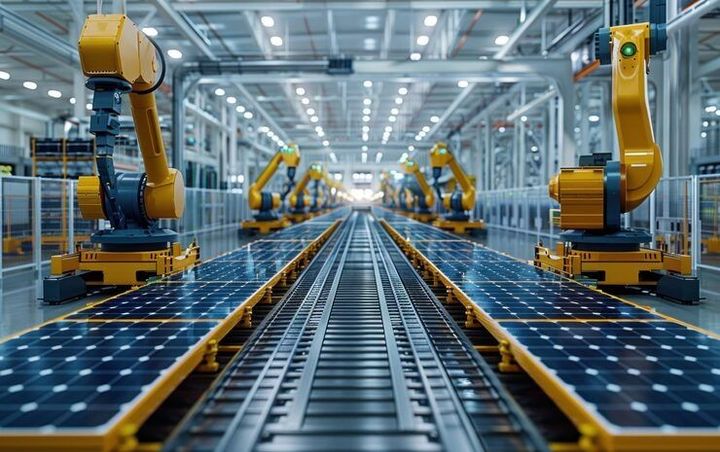
Industrial Solar Manufacturing Machines: Advanced Solar Production Technology
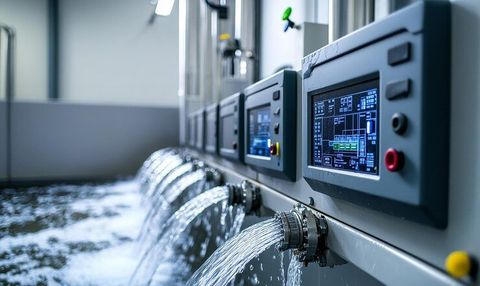
Industrial solar manufacturing machines are specialized systems used to produce solar photovoltaic (PV) cells, panels, and related components. These machines support the conversion of raw materials into products that capture sunlight and generate electricity. They combine mechanical engineering, electrical control, material processing, robotics, and inspection technology.
Solar manufacturing has developed from relatively simple assembly operations into a complex industrial process. Modern production facilities may use automated material handling, precision cutting, semiconductor processing, robotic assembly, and digital monitoring to improve consistency and reduce production errors.
The main purpose of solar manufacturing equipment is to make production more accurate, repeatable, and suitable for large-scale output. Different machines perform different tasks, from preparing silicon wafers to connecting solar cells and testing finished modules.
A solar manufacturing facility may produce only one component or manage several stages of the production chain. The equipment required depends on the product, manufacturing capacity, cell technology, available space, and applicable quality standards.
Importance of Solar Manufacturing Technology
Solar energy is an important part of the global transition toward electricity generation with lower greenhouse gas emissions. As more households, businesses, industries, and utilities adopt photovoltaic systems, manufacturers need reliable production methods and consistent product quality.
Industrial solar manufacturing machines help address several important challenges.
Production consistency: Automated processes help maintain uniform dimensions, material placement, and electrical connections.
Quality control: Inspection equipment identifies cracks, surface defects, poor connections, and other manufacturing problems.
Production efficiency: Coordinated machinery can reduce unnecessary handling and delays between manufacturing stages.
Worker safety: Enclosed equipment, robotic handling, and controlled processes can limit exposure to hazardous materials and repetitive manual tasks.
Material management: Precision cutting and monitoring help manufacturers track material use and identify avoidable waste.
Product traceability: Digital production records can connect individual batches with inspection results and manufacturing conditions.
These benefits matter to equipment engineers, factory managers, quality specialists, energy developers, researchers, and policymakers. However, automation alone does not guarantee high output or dependable products. Equipment maintenance, staff training, suitable materials, and effective quality procedures remain essential.
Main Types of Industrial Solar Manufacturing Machines
Solar production involves several stages, and each stage requires specialized machinery. The following table summarizes common equipment categories and their purposes.
Machine or system | Main function |
|---|---|
Silicon ingot production equipment | Forms silicon into solid ingots |
Wafer slicing machines | Cuts ingots into thin silicon wafers |
Wafer cleaning systems | Removes surface contamination |
Solar cell processing equipment | Creates electrical properties within cells |
Screen-printing or metallization systems | Forms electrical contacts |
Cell testing equipment | Measures electrical performance |
Cell stringing machines | Connects cells into electrical strings |
Layup and lamination systems | Arranges and seals module layers |
Framing and junction-box equipment | Supports module assembly and electrical connections |
Electroluminescence inspection systems | Detects certain internal cell and connection defects |
Not every solar factory contains all these machines. Some facilities manufacture cells, while others purchase cells and concentrate on panel assembly. Fully integrated plants may handle multiple stages, requiring additional process controls and specialized engineering.
How Solar Panel Production Equipment Works
The manufacturing process varies with cell chemistry and module design, but crystalline-silicon solar production commonly follows several connected steps.
Silicon preparation and wafer production
High-purity silicon is processed into ingots, which are then sliced into thin wafers. Precision slicing equipment must control thickness, surface quality, and material loss. The wafers undergo cleaning and preparation before further processing.
Solar cell manufacturing
Wafers pass through carefully controlled chemical, thermal, and deposition processes that establish the structures needed to convert sunlight into electricity. Depending on the technology, production may include texturing, diffusion, passivation, thin-film deposition, laser processing, and metallization.
These stages require accurate temperature control, contamination management, chemical handling, and process monitoring. Small variations can affect electrical performance and manufacturing yield.
Cell testing and sorting
Electrical testing measures characteristics such as current, voltage, and conversion efficiency. Cells are grouped according to their measured properties so that module assembly can maintain appropriate electrical consistency.
Solar module assembly
Cell stringing machines connect individual cells using conductive ribbons or other interconnection methods. Automated layup equipment positions the cell strings between protective layers. Lamination then bonds the layers into a durable module structure.
Depending on the design, additional equipment installs frames, junction boxes, and electrical connections.
Final inspection
Finished modules undergo visual, electrical, and other applicable tests. Electroluminescence imaging can reveal certain cracks and inactive regions that may not be visible during ordinary visual inspection. Insulation and electrical performance tests help evaluate whether a module meets specified requirements.
The finished product is then labeled and documented for traceability.
Advanced Automation in Solar Manufacturing
Automation is increasingly important in modern solar production because manufacturing involves repetitive movements, precise positioning, controlled environments, and large quantities of components.
Common automation technologies include:
Industrial robotics: Moves wafers, cells, glass, and finished modules between stations.
Machine vision: Uses cameras and image-processing systems to inspect surfaces and component placement.
Programmable logic controllers: Coordinate equipment movements, safety interlocks, and process sequences.
Manufacturing execution systems: Record production progress, machine status, batch information, and quality results.
Predictive maintenance tools: Analyze operating data to identify possible equipment problems before unexpected downtime.
Automated guided vehicles: Transport materials between storage areas and production stations.
Digital monitoring can help engineers identify recurring defects and compare performance across shifts or production lines. However, monitoring systems depend on reliable sensors, suitable data, and correctly configured software.
Automation also introduces challenges. Manufacturers must consider cybersecurity, equipment compatibility, operator training, spare parts, and safe procedures for maintenance and troubleshooting.
Recent Developments in Solar Production Technology
Solar manufacturing continues to evolve as manufacturers improve cell architectures, automate production lines, and explore alternative photovoltaic materials. Developments reported during 2025 and 2026 show that equipment design and manufacturing strategy remain closely connected.
Growing adoption of advanced silicon cells
In 2025, industry reporting highlighted the growing role of N-type silicon technology, including Tunnel Oxide Passivated Contact (TOPCon), heterojunction (HJT), and back-contact (BC) cell designs. These technologies require different combinations of deposition, surface treatment, laser processing, and electrical contact formation. Equipment manufacturers must therefore adapt machinery to the selected cell architecture.
An October 2026 fact sheet from the International Energy Agency Photovoltaic Power Systems Programme reported that global cumulative solar PV capacity reached approximately 2.96 terawatts by the end of 2025. Around 690 gigawatts of new capacity was installed during that year. The report also highlighted continuing manufacturing overcapacity, increasing distributed solar deployment, and greater attention to energy storage.
Interest in tandem and thin-film technologies
Perovskite-silicon tandem cells and other thin-film technologies remain important areas of research and industrial development. Tandem designs combine light-absorbing materials to capture different parts of the solar spectrum. Their manufacturing may require specialized deposition, coating, encapsulation, and testing equipment.
Scaling these technologies remains challenging because durability, environmental stability, process repeatability, and long-term field performance must be demonstrated. Research progress should not be confused with universal commercial readiness.
More connected production lines
During 2025 and 2026, digital manufacturing, automated inspection, and production traceability continued to receive attention. Integrated systems can connect machine settings with quality results, making it easier to investigate recurring faults and maintain consistent production records.
Laws, Policies, and Quality Standards
Solar manufacturing is affected by electrical safety requirements, product standards, environmental rules, worker protection regulations, and national renewable energy policies. The exact requirements depend on the manufacturing location and the markets where finished products will be used.
India's solar manufacturing framework
India has expanded its domestic solar manufacturing framework through the Ministry of New and Renewable Energy (MNRE).
The Approved List of Models and Manufacturers (ALMM) framework establishes eligibility requirements for specified solar modules and, under the applicable provisions, solar cells used in covered projects.
In July 2025, MNRE clarified procedures related to the ALMM framework for solar cells while retaining the previously announced 1 June 2026 date for mandatory use under the relevant provisions. The specific applicability depends on the project and applicable exemptions.
Product quality and safety
India's Solar Systems, Devices, and Components Goods Order, 2025, revised the national quality-control framework for specified photovoltaic products, inverters, and storage batteries. The order was notified in January 2025, with implementation provisions and effective dates that manufacturers should check against current government notifications.
Applicable photovoltaic module and electrical safety standards.
Chemical storage, handling, emissions, and waste disposal rules.
Machine guarding, emergency stops, and electrical isolation procedures.
Occupational health and worker training requirements.
Import, export, and product documentation requirements where applicable.
Environmental assessment and factory permits required by local authorities.
International standards from the International Electrotechnical Commission (IEC) are widely used in photovoltaic product testing and safety evaluation. The relevant standard depends on the product type and intended application. Manufacturers should confirm the current edition and any national adoption requirements before designing inspection procedures.
Tools and Resources for Solar Factory Planning
Industrial solar manufacturing requires more than production machinery. Engineering teams also need planning tools, inspection systems, technical documentation, and reliable operating data.
Useful resource categories include:
Production capacity calculators: Estimate annual output from operating hours, line speed, planned maintenance, and expected production losses.
Process flow diagrams: Map each manufacturing stage, material movement, and inspection point.
Equipment monitoring dashboards: Track machine availability, operating temperatures, alarms, cycle times, and maintenance records.
Quality management templates: Document inspection results, defects, corrective actions, and batch traceability.
Energy monitoring tools: Measure electricity consumption across individual machines and production areas.
Computer-aided design software: Support factory layouts, machine placement, material flow, and equipment integration.
Statistical process control tools: Help identify variation in wafer dimensions, cell performance, and module assembly.
Technical learning materials: Explain photovoltaic fundamentals, manufacturing processes, electrical safety, and relevant standards.
Regulatory checklists: Help teams track permits, product certifications, environmental requirements, and changing regulations.
When evaluating a production line, manufacturers should compare throughput, precision, compatibility, maintenance requirements, energy consumption, operator training needs, and inspection capabilities. The highest operating speed is not necessarily the best choice if it increases defect rates or creates bottlenecks elsewhere.
A useful planning method is to map the complete production process before selecting individual machines. This helps identify the actual capacity requirement for each stage and reduces the risk of purchasing equipment that cannot operate effectively with the rest of the line.
Frequently Asked Questions
What are industrial solar manufacturing machines?
Industrial solar manufacturing machines are specialized systems used to produce photovoltaic cells, solar panels, and related components. They perform tasks such as wafer slicing, cell processing, electrical connection, lamination, and quality inspection.
Which machines are required for solar panel manufacturing?
A typical module assembly line may require cell stringing equipment, automated layup systems, laminators, framing equipment, junction-box installation systems, and electrical testing machines. A facility manufacturing solar cells also needs specialized wafer and cell-processing equipment.
How does automation improve solar panel production?
Automation helps maintain consistent positioning, repeatable processing, and systematic inspection. It can reduce manual handling and improve production records, but results depend on equipment configuration, maintenance, and operator training.
What regulations apply to solar manufacturing in India?
Requirements may include MNRE's ALMM framework, applicable Bureau of Indian Standards requirements, electrical safety standards, environmental regulations, and factory safety rules. The specific obligations depend on the product, project, and manufacturing activity.
What should manufacturers consider when selecting solar production equipment?
They should assess production capacity, compatibility with the intended cell technology, precision, energy use, inspection capabilities, maintenance needs, worker safety, and compliance requirements. Planning for future technology changes is also important.
Conclusion
Industrial solar manufacturing machines play a central role in producing reliable photovoltaic cells and modules. From silicon wafer processing to automated assembly and final inspection, each manufacturing stage contributes to the quality and performance of the finished product.