Food Processing Automation Machines: Manufacturing Technology Insights
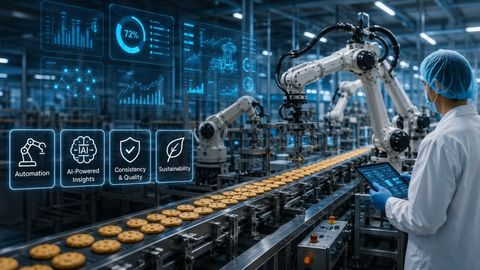
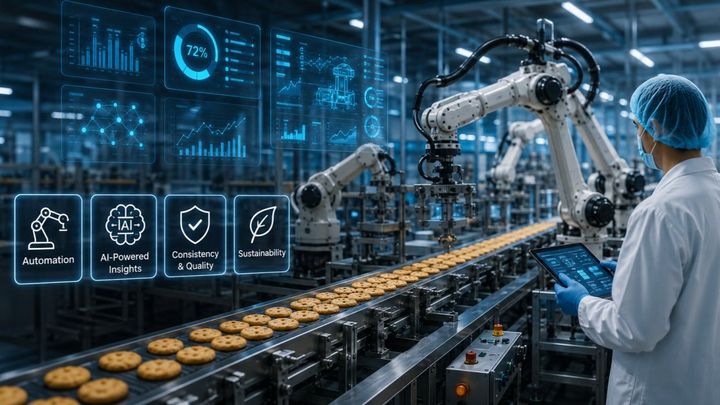
Food processing automation machines are technologies designed to control, monitor, and perform different stages of food manufacturing with limited manual intervention. They can be used for sorting, washing, cutting, mixing, cooking, filling, sealing, labeling, inspection, and packaging.
Modern food manufacturing involves many repeated and closely controlled activities. Small changes in temperature, moisture, weight, timing, or handling can affect the final product. Automation helps manufacturers monitor these variables more consistently and record important production information.
A typical automated food processing system may combine:
- Programmable logic controllers for machine control
- Sensors for temperature, pressure, weight, flow, and moisture
- Machine vision for inspection and sorting
- Robotic systems for handling and packaging
- Automated conveyors and material movement
- Data collection and monitoring software
- Predictive maintenance tools
- Digital traceability systems
The technology ranges from individual automated machines to connected production lines. The level of automation depends on the food product, production process, hygiene requirements, facility design, and regulatory environment.
Food processing automation is also becoming part of the wider Industry 4.0 movement. Machines can collect production data and communicate with other equipment, allowing operators to understand processes in greater detail.
Importance
Food processing automation matters because food manufacturing requires a careful balance between productivity, consistency, hygiene, quality control, and traceability.
One important advantage is process consistency. Automated equipment can follow programmed operating parameters repeatedly. This is particularly useful for processes where timing, temperature, dosage, or weight must remain within defined limits.
Automation also supports food safety. Sensors and monitoring systems can identify changes in important process conditions. Automated inspection systems can examine products for certain visible characteristics, while digital records can make production information easier to review.
Another important area is traceability. Modern food safety programs increasingly emphasize the ability to identify where food came from and how it moved through a supply chain. Technology-enabled traceability is one of the central elements of the FDA's New Era of Smarter Food Safety framework.
Food processing automation can affect several areas of manufacturing:
| Area | Role of Automation |
|---|---|
| Sorting | Identifies and separates products |
| Cutting | Controls repeated cutting operations |
| Mixing | Maintains programmed mixing cycles |
| Cooking | Monitors time and temperature |
| Filling | Controls measured product portions |
| Packaging | Automates handling and sealing |
| Inspection | Uses sensors and machine vision |
| Traceability | Records batches and process information |
| Maintenance | Monitors equipment conditions |
Automation can also reduce dependence on highly repetitive manual activities. This does not mean every food process should become fully automated. Human supervision remains important for process decisions, hygiene management, maintenance, quality assurance, and exception handling.
Recent Updates
The past year has seen growing attention toward artificial intelligence, robotics, machine vision, digital traceability, and data-driven food manufacturing.
A 2025 review indexed through the FAO AGRIS system examined the growing use of robotics, AI, and automated technologies across food production and processing. It highlighted applications in areas such as quality assurance, processing, packaging, and material handling.
Machine vision is another important development. Research published in 2025 examined combinations of optical sensors, machine learning, and robotics for food quality assessment and automated handling. These technologies can support non-destructive inspection and real-time process decisions.
Robotics adoption is also expanding. The International Federation of Robotics reported in June 2026 that industrial robot installations in the United States reached 38,000 units in 2025, an 11% year-on-year increase. It also reported that food-industry robot adoption in the United States increased by 30% during 2025.
Another major trend is flexible automation. Instead of designing equipment for only one fixed task, manufacturers are increasingly interested in systems that can handle different products, packaging formats, or production conditions.
Collaborative robots, commonly called cobots, are also receiving attention because they can be designed for tasks where people and automated equipment work within the same production environment. Their suitability still depends on risk assessment, machine design, guarding, and the specific application.
Digital tools are becoming more important as well. In January 2026, FAO and EBRD announced an e-dialogue focused on robotics and automation in agrifood systems, noting progress in post-harvest operations, food processing, and distribution.
In June 2026, FAO's Committee on World Food Security also held a high-level forum addressing AI, digitalization, and data governance in food systems. The discussion included both the opportunities and risks associated with increasing digital adoption.
A simple view of the current technology direction is:
Sensors → Automation → Data Collection → AI Analysis → Predictive Decisions → Connected Manufacturing
The important point is that automation is moving beyond mechanical repetition. Modern systems increasingly combine physical equipment with software, sensors, analytics, and digital records.
Laws or Policies
Food processing automation must operate within food safety, hygiene, labeling, worker protection, electrical safety, and machinery requirements applicable to the country where the equipment is installed.
In India, food manufacturers operate under the Food Safety and Standards Act, 2006, together with rules and regulations administered by the Food Safety and Standards Authority of India. The regulatory framework covers areas such as food standards, additives, contaminants, packaging, labeling, and food-business requirements.
Indian regulatory updates continued during 2026. For example, FSSAI's notification records include amendments and regulatory developments concerning laboratories, packaging, food-business regulations, and other food-safety matters during June–September 2026.
For manufacturers connected to the United States market, the FDA Food Safety Modernization Act is particularly relevant. The Food Traceability Rule establishes additional recordkeeping requirements for certain foods included on the Food Traceability List. These records are associated with Critical Tracking Events and Key Data Elements.
There has also been an important 2026 development concerning the U.S. Food Traceability Rule. FDA stated that the original January 20, 2026 compliance date has been affected by federal legislation, with FDA directed not to enforce the rule before July 20, 2028.
This does not mean food manufacturers should ignore traceability. Digital batch records, lot identification, production monitoring, and reliable data management remain important parts of modern food safety systems.
Automation equipment should therefore be evaluated not only for mechanical performance but also for:
- Hygienic design
- Cleaning requirements
- Food-contact materials
- Data integrity
- Traceability
- Process monitoring
- Emergency safety
- Electrical and machinery protection
- Applicable national food regulations
Specific requirements vary by product, process, facility, and country, so regulatory compliance should always be assessed against the applicable local framework.
Tools and Resources
A range of general tools can support the planning and management of automated food processing systems.
Process monitoring tools can record temperature, pressure, flow, humidity, weight, and other production parameters.
Machine vision systems can assist with sorting, inspection, counting, size classification, and identification of visible defects.
PLC and HMI platforms provide common methods for controlling equipment and displaying operating information.
Industrial data dashboards can organize production information and help identify changes in equipment performance.
Predictive maintenance software can analyze equipment conditions and provide indicators of potential maintenance requirements.
Traceability templates can organize batch numbers, production dates, raw-material information, processing stages, and distribution records.
Food safety checklists can help teams review hygiene controls, monitoring procedures, sanitation activities, and corrective actions.
Energy monitoring tools can track electricity, steam, compressed air, refrigeration, and water usage across production processes.
Training resources can include machinery manuals, food-safety guidance, technical standards, maintenance instructions, and operator training materials.
A useful automation planning process can follow this sequence:
- Map the existing food processing workflow.
- Identify repetitive or highly variable operations.
- Determine which process parameters require monitoring.
- Review food-safety and hygiene requirements.
- Define data and traceability requirements.
- Select suitable automation technologies.
- Test the system under realistic operating conditions.
- Train operators and maintenance personnel.
- Monitor performance and improve the process over time.
FAQs
What are food processing automation machines?
They are machines and integrated systems that automate or monitor activities such as sorting, cutting, mixing, cooking, filling, inspection, handling, and packaging in food manufacturing.
How does AI support food processing automation?
AI can analyze information from sensors, cameras, and production systems. Depending on the application, it can support quality inspection, anomaly detection, process analysis, forecasting, and predictive maintenance.
Is complete automation necessary in food manufacturing?
No. The appropriate level depends on the process, product, hygiene requirements, production volume, safety considerations, and available infrastructure. Many facilities use a combination of automated equipment and human supervision.
Why is traceability important in automated food production?
Traceability helps connect food products with relevant production and supply-chain information. Digital systems can make batch records easier to organize, retrieve, and analyze when information is needed.
What is the future of food processing automation?
Future development is likely to involve greater integration of robotics, machine vision, AI, sensors, connected equipment, digital traceability, and predictive analytics. Human oversight will remain important for safety, quality, maintenance, and decision-making.
Conclusion
Food processing automation machines are becoming an important part of modern manufacturing technology. Their role extends beyond faster production. Automation can support consistent processing, quality monitoring, food safety, traceability, equipment management, and data-based decision-making.