Industrial Machines Development: Explore Advanced Manufacturing Systems
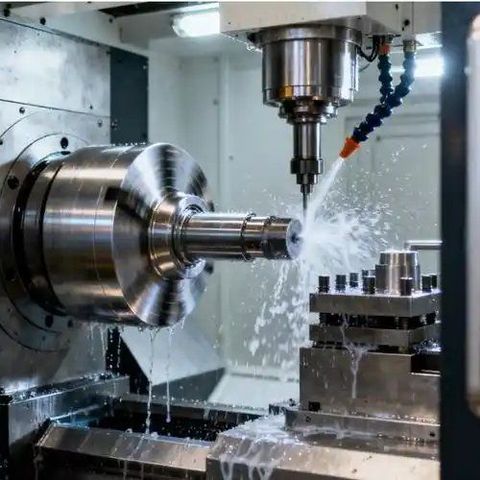
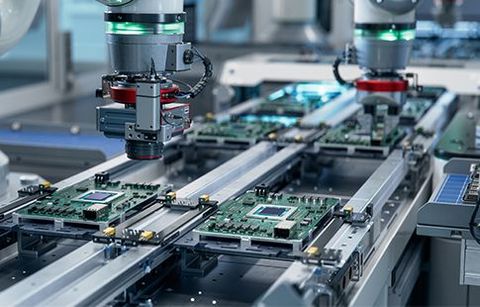
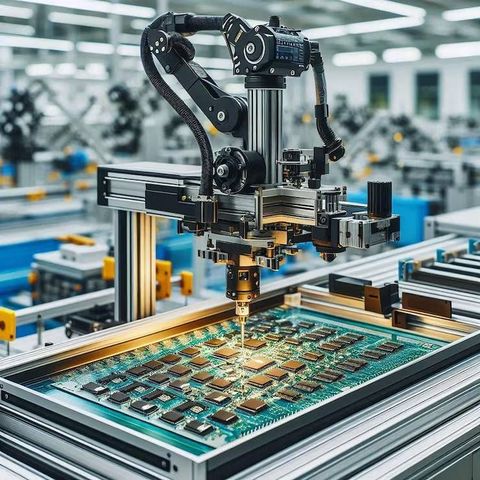
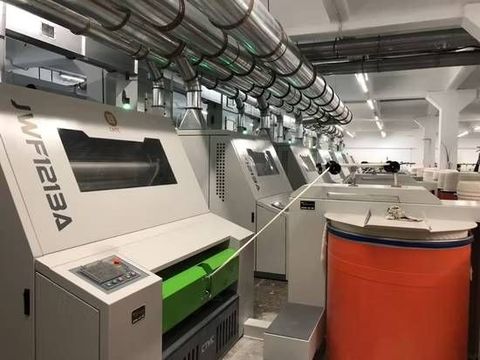
Industrial machines are mechanical, electrical, electronic, and software-based systems used to perform manufacturing and production activities. They include CNC machines, robotic systems, industrial presses, packaging equipment, material-handling systems, welding machines, inspection equipment, and automated production lines.
The development of industrial machines began with relatively simple mechanical equipment designed to reduce manual effort. Over time, manufacturers introduced electric motors, programmable controls, sensors, computer numerical control, robotics, and industrial software.
Today, industrial machine development is increasingly connected with advanced manufacturing systems, industrial automation, machine control systems, robotics technology, and smart factory solutions.
Modern equipment can collect operational information through sensors and communicate with other machines or software platforms. This creates opportunities for manufacturers to understand production conditions more clearly and respond to problems faster.
The main stages of modern industrial machine development include:
- Mechanical automation
- Electrical control systems
- Programmable automation
- CNC and computer-controlled machinery
- Industrial robotics
- Connected manufacturing equipment
- AI-assisted industrial systems
- Digital twin and intelligent manufacturing technologies
The purpose is not simply to make machines more complicated. Good machine development aims to improve precision, consistency, safety, flexibility, energy management, and production visibility.
Why Industrial Machine Development Matters Today
Industrial machine development affects manufacturers, engineers, technicians, factory planners, technology providers, researchers, and many other parts of the industrial ecosystem.
Modern production environments often need to manufacture products with tighter tolerances and more complex designs. At the same time, manufacturers need better control over quality, energy use, downtime, and production planning.
Advanced industrial machines can address several of these challenges.
Improved Precision and Consistency
Computer-controlled equipment can follow programmed movements and operating parameters with a high level of repeatability.
CNC machining systems, robotic welding equipment, automated inspection machines, and precision assembly systems are examples of technologies that can support consistent manufacturing processes.
Greater Automation
Automation allows machines to perform repetitive activities according to predefined instructions.
Automation may involve:
- Programmable logic controllers
- Industrial robots
- Automated material handling
- Machine vision
- Sensors and actuators
- Automated inspection
- Manufacturing execution software
Automation does not eliminate the need for human expertise. Instead, it changes how people interact with production systems and increases the importance of programming, maintenance, engineering, quality control, and system monitoring.
Better Production Data
Connected machines can generate information about operating conditions, production cycles, equipment status, temperature, vibration, energy consumption, and other parameters.
This information can support predictive maintenance, production analysis, quality management, and equipment planning.
Flexible Manufacturing
Modern factories increasingly need to produce different products or variations without completely redesigning their production systems.
Programmable machinery, modular automation, robotics, and digital control systems can make production equipment more adaptable.
Energy and Resource Management
Energy monitoring systems can help manufacturers understand how equipment consumes electricity and where production processes may be using more resources than expected.
This supports broader goals related to energy efficiency, environmental management, and sustainable manufacturing.
Major Technologies Shaping Industrial Machines
Several technologies are influencing the development of industrial machinery.
Artificial Intelligence and Machine Learning
AI can analyze large volumes of manufacturing information and identify patterns that may be difficult to detect manually.
Potential applications include:
- Visual quality inspection
- Equipment condition monitoring
- Production forecasting
- Process optimization
- Anomaly detection
- Industrial robotics
- Manufacturing data analysis
The European Commission and other regulators are also paying increasing attention to the risks associated with AI-based systems, particularly when AI can influence safety or critical industrial operations.
Industrial Robotics
Industrial robots are widely used for repetitive and precise operations such as welding, assembly, handling, painting, packaging, and inspection.
The development of collaborative robotics is also changing how people and machines can work within shared production environments. Appropriate risk assessment and safety controls remain essential.
Digital Twins
A digital twin is a digital representation of a physical machine, production line, or process.
It can be used to model operating conditions, examine potential changes, monitor equipment information, or evaluate manufacturing scenarios.
India's NITI Aayog identified AI and machine learning, advanced materials, digital twins, and robotics as high-impact technologies in its October 2025 roadmap for advanced manufacturing.
Industrial Internet of Things
Industrial IoT connects machines, sensors, controllers, and software systems so that operational information can be collected and exchanged.
This can create a more connected manufacturing environment in which production data is available across different levels of the factory.
Recent Developments in Industrial Machine Technology
Industrial machine development has accelerated during the past year, particularly around AI, connected equipment, robotics, and intelligent industrial operations.
In April 2026, the World Economic Forum published its Intelligent Industrial Operations Outlook 2026, describing a shift from traditional automation toward intelligent, connected, and increasingly autonomous industrial systems. The report highlights AI, physical AI, and other advanced technologies as important influences on industrial operations.
Another important development has been the increasing integration of AI with physical machinery. Instead of using AI only for data analysis, industrial systems are moving toward technologies that can interact with physical processes.
Recent development areas include:
- AI-assisted machine monitoring
- Computer vision for quality inspection
- Autonomous industrial equipment
- Connected production systems
- Digital twins
- Robotics and collaborative robots
- Edge computing
- Industrial cybersecurity
- Energy monitoring
- Predictive maintenance
India has also placed greater policy attention on advanced manufacturing. In October 2025, NITI Aayog released a roadmap focused on using frontier technologies to strengthen manufacturing capabilities across priority sectors.
The trend suggests that future industrial machines will increasingly combine mechanical engineering, electronics, software, communications, data analytics, and artificial intelligence.
Laws, Policies, and Manufacturing Regulations
Industrial machines are affected by different safety, environmental, electrical, cybersecurity, and product regulations depending on the country where they are designed, manufactured, installed, or operated.
There is no single worldwide industrial-machine law. Businesses and engineers must identify the rules applicable to the specific machine and market.
European Union Machinery Regulation
One important recent regulatory development is Regulation (EU) 2023/1230 on machinery.
The regulation establishes health and safety requirements for machinery and related products. Its current consolidated version was updated in May 2026, and the main regulation applies from 20 January 2027.
The regulation is particularly relevant to the development of modern machinery because it addresses technological developments and safety considerations involving increasingly sophisticated equipment.
Artificial Intelligence Regulation
The EU AI Act creates a risk-based framework for artificial intelligence. The Act entered into force on 1 August 2024, with different requirements becoming applicable over time.
Industrial organizations using AI-based equipment should therefore consider whether a particular AI application falls under applicable requirements.
India Manufacturing Policy Direction
India announced the National Manufacturing Mission in the Union Budget 2025–26. The mission focuses on areas including technology availability, workforce readiness, MSME development, product quality, and manufacturing competitiveness.
In March 2026, the Government of India also reported continued implementation of manufacturing initiatives, including Production Linked Incentive schemes and other measures supporting domestic manufacturing and global value-chain participation.
Manufacturers in India should consider applicable national and state-level requirements covering machinery safety, electrical systems, environmental protection, workplace conditions, data security, and industrial operations.
Useful Tools and Resources for Industrial Machine Development
Professionals and learners can use several categories of tools when studying or developing industrial machines.
Engineering and Design Tools
Useful categories include:
- 2D and 3D CAD software
- Mechanical simulation platforms
- Finite element analysis tools
- Electrical design software
- PLC programming environments
- Robotics programming platforms
Manufacturing Analysis Tools
Manufacturing teams may use:
- Production monitoring dashboards
- Overall equipment effectiveness calculators
- Energy monitoring tools
- Maintenance planning templates
- Process capability calculators
- Quality inspection checklists
- Downtime analysis worksheets
Learning Resources
People learning about industrial automation can explore:
- Manufacturing engineering textbooks
- Industrial automation courses
- Machine safety guidance
- Robotics learning materials
- PLC programming tutorials
- CNC programming references
- Industrial cybersecurity frameworks
- Engineering standards databases
A useful learning approach is to study mechanical systems first, followed by electrical control, automation, sensors, programming, industrial networking, and data analysis.
Frequently Asked Questions
What is industrial machine development?
Industrial machine development is the process of designing, improving, integrating, and controlling machinery used in manufacturing and industrial production. It can involve mechanical engineering, electronics, automation, software, robotics, sensors, and data systems.
How is AI changing industrial machines?
AI can support machine vision, predictive maintenance, anomaly detection, process analysis, robotics, and production planning. Its suitability depends on the application, available data, safety requirements, and appropriate human oversight.
What is a smart industrial machine?
A smart industrial machine generally combines physical equipment with sensors, digital controls, connectivity, and software. Some systems also use analytics or AI to interpret operational information.
Why are digital twins important in manufacturing?
Digital twins can provide a digital representation of physical equipment or processes. They may help teams examine machine behavior, evaluate scenarios, monitor conditions, and identify potential improvements before making physical changes.
What skills are important for modern industrial machine development?
Important areas include mechanical engineering, electrical systems, PLC programming, robotics, CNC technology, industrial networking, data analysis, cybersecurity, machine safety, and systems integration.
Conclusion
Industrial machines are moving from isolated mechanical equipment toward connected and intelligent manufacturing systems. The development of CNC technology, robotics, sensors, industrial networks, AI, digital twins, and advanced control systems is changing how modern factories operate.