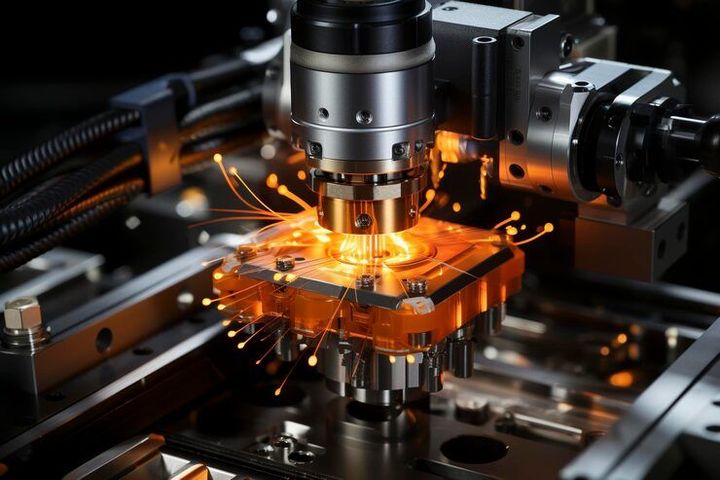
Industrial Laser Cutting Machines: Advanced Manufacturing Insights
Industrial laser cutting machines are manufacturing systems that use a concentrated beam of light to cut, shape, or process materials. They are widely used in metal fabrication, automotive manufacturing, aerospace production, electronics, construction, and machinery manufacturing.
Unlike conventional cutting methods that rely on physical blades, laser cutting directs a focused beam onto a material's surface. The concentrated energy heats the material until it melts, vaporizes, or separates. An assist gas may help remove molten material and create a cleaner cutting edge.
Laser cutting technology developed alongside advances in optics, electronics, and industrial automation. Early industrial systems were often limited to specialized applications. Modern systems can process complex shapes, repeat detailed patterns, and integrate with computer-controlled production equipment.
How Laser Cutting Technology Works
The cutting process begins with a digital design created using computer-aided design software. Computer-aided manufacturing software then converts the design into machine instructions.
The main steps include:
Design preparation: Engineers create a drawing or three-dimensional model and define the required dimensions.
Material positioning: A metal sheet, plate, tube, or other compatible material is placed in the machine.
Beam generation: The laser source produces concentrated light energy.
Cutting movement: The machine moves the beam or workpiece along a programmed path.
Edge formation: Heat separates the material while assist gas removes molten residue.
Quality inspection: Operators examine dimensions, edges, and surface condition.
The result depends on the material, thickness, laser power, beam quality, cutting speed, focus position, and gas selection.
Main Types of Industrial Laser Cutting Systems
Different laser technologies suit different manufacturing needs.
Laser type | Common applications | Key characteristics |
|---|---|---|
Fiber laser | Steel, stainless steel, aluminum | Efficient processing of many industrial metals |
CO₂ laser | Certain metals, plastics, wood, and other compatible materials | Uses a gas-based laser source |
Nd:YAG laser | Specialized metal processing and precision applications | Solid-state laser technology |
Ultrafast laser | Fine features and sensitive materials | Uses extremely short light pulses |
Fiber lasers are common in modern metal fabrication because they can process many reflective and non-reflective metals when configured appropriately. CO₂ systems remain relevant for certain nonmetal materials and specialized applications. The correct system depends on the material and the required result.
Importance of Industrial Laser Cutting in Modern Manufacturing
Why Laser Cutting Matters Today
Manufacturers must produce accurate components while managing material waste, production time, and quality requirements. Industrial laser cutting machines help address these challenges by following digital designs and repeating cutting paths with consistent accuracy.
The technology is useful for both small production batches and large manufacturing operations. Its flexibility allows engineers to modify designs without creating a new physical cutting tool for every shape.
Key benefits include:
Precision: Focused energy can produce detailed shapes and narrow cutting paths.
Design flexibility: Digital programs make it easier to adjust component dimensions and patterns.
Repeatability: Computer-controlled movement helps maintain consistency across production batches.
Material efficiency: Carefully arranged cutting layouts can reduce unused sheet material.
Automation: Machines can connect with loading systems, robotic equipment, and production software.
Reduced mechanical contact: Laser cutting does not require a cutting blade to press directly against the material.
These benefits depend on correct machine settings, suitable materials, maintenance, and effective process control.
Industries That Use Laser Cutting Technology
Industrial laser cutting supports a wide range of manufacturing activities.
Industry | Typical applications |
|---|---|
Automotive | Brackets, body panels, and structural components |
Aerospace | Selected precision metal components |
Electronics | Enclosures, panels, and small metal parts |
Construction | Metal frames, brackets, and architectural panels |
Medical equipment | Selected instrument components and enclosures |
Industrial machinery | Machine guards, housings, and fabricated parts |
Renewable energy | Components for selected energy systems |
Each industry has different requirements for dimensional accuracy, material strength, surface finish, and traceability. A process suitable for a sheet-metal enclosure may not be appropriate for a critical aerospace component without additional validation.
Challenges and Limitations
Laser cutting is not the best method for every material or application. Thick sections may require alternative cutting technologies, depending on the required edge quality and production conditions.
Common challenges include:
High energy demand in some operating conditions.
Heat-related distortion or changes to material properties.
Smoke, fumes, and fine particles generated during processing.
Sensitivity to focus position, contamination, and incorrect settings.
The need for trained operators and appropriate protective systems.
Differences in cutting performance between materials and thicknesses.
Manufacturers should evaluate the complete production process rather than relying on laser power alone. Cutting speed, edge quality, downstream welding, and material utilization all affect the final result.
Recent Updates and Trends in Laser Cutting Technology
Higher-Power Fiber Laser Systems
During 2025 and 2026, high-power fiber lasers continued to attract attention in industrial metal fabrication. These systems are designed to process demanding cutting applications, including thicker metal sections.
However, higher power does not automatically produce better results. Industry analysis published in February 2026 highlighted that fiber lasers can be particularly fast on thinner metals, while plasma cutting may be more competitive for certain thicker steel sections.
Smart Manufacturing and Digital Integration
Another important trend is the integration of laser cutting machines with digital manufacturing systems. Modern production environments increasingly use connected software to coordinate machine instructions, material movement, and quality records.
Examples include:
Real-time monitoring of machine operating conditions.
Automatic adjustment of selected process parameters.
Production scheduling based on machine availability.
Digital records for inspection and traceability.
Predictive maintenance based on equipment performance data.
These technologies can improve production visibility, although their results depend on accurate data, suitable integration, and consistent maintenance practices.
Automated Material Handling
Automated loading and unloading systems help move sheets and finished components through production. Robotic arms, storage towers, and conveyor systems can reduce repetitive manual handling and support more continuous operations.
Automation also introduces new requirements for guarding, machine coordination, emergency stops, and operator training.
Greater Attention to Laser Safety
Safety remains a major consideration as manufacturers adopt more powerful laser systems. Guidance from occupational safety authorities and established machinery standards addresses hazards such as laser radiation, fire, airborne contaminants, and moving equipment.
Laws, Policies, and Safety Standards
Workplace Safety Requirements
Industrial laser cutting machines can expose workers to serious hazards if they are installed or operated incorrectly. Applicable requirements depend on the country, workplace, machine design, and type of material being processed.
In the United States, the Occupational Safety and Health Administration (OSHA) provides information about workplace laser hazards and relevant safety standards. The Food and Drug Administration (FDA) regulates applicable radiation-safety aspects of laser products under federal requirements, including 21 CFR Parts 1010 and 1040.
Considerations for Manufacturers in India
Indian manufacturers should assess applicable national and state requirements for industrial safety, machinery operation, fire prevention, electrical installations, and environmental protection.
Depending on the facility and its operations, relevant requirements may include:
Applicable occupational safety and factory legislation.
State factory rules and workplace safety requirements.
Electrical installation and equipment safety provisions.
Fire protection and emergency preparedness requirements.
Environmental permissions and air-pollution control requirements where applicable.
Worker training, hazard assessments, and documented operating procedures.
The specific legal framework depends on the facility, the applicable legislation in force, and the nature of the manufacturing activity. Businesses should confirm current obligations with qualified safety professionals and the appropriate regulatory authorities.
Essential Safety Measures
A safe laser cutting setup should include appropriate protective enclosures, interlocks, warning labels, emergency stops, and exhaust or filtration arrangements where required.
Operators should also follow these practices:
Use the machine only after suitable training.
Keep protective covers and interlocks in working condition.
Follow approved procedures for maintenance and cleaning.
Assess fire risks associated with the processed material.
Control exposure to fumes and airborne particles.
Use appropriate personal protective equipment.
Keep inspection, maintenance, and training records.
Safety glasses alone are not a substitute for a properly designed enclosure and suitable engineering controls.
Tools and Resources for Laser Cutting Operations
Design and Programming Tools
Computer-aided design software helps engineers create accurate component drawings. Computer-aided manufacturing tools convert those designs into machine instructions and cutting paths.
Nesting software arranges multiple components on a sheet to help reduce unused material. Simulation tools can identify potential cutting-path conflicts before production begins.
Inspection and Process Monitoring
Measurement instruments, optical inspection systems, and dimensional inspection software help verify finished components. Monitoring dashboards can record machine utilization, cutting cycles, alarms, and maintenance activity.
Manufacturers may also use digital production logs to track material batches and inspection results.
Useful Planning Checklist
Before starting a laser cutting project, teams can review the following items:
A standard checklist helps teams reduce avoidable errors and establish repeatable operating procedures.
Frequently Asked Questions
What materials can industrial laser cutting machines process?
Depending on the laser type and configuration, machines can process carbon steel, stainless steel, aluminum, and selected plastics, wood, and other materials. Material compatibility should always be checked before processing.
How accurate are industrial laser cutting machines?
Accuracy depends on the machine design, material, thickness, calibration, cutting parameters, and thermal conditions. Manufacturers should consult equipment specifications and validate tolerances through sample testing.
What is the difference between fiber and CO₂ laser cutting?
Fiber lasers use a solid-state source and are widely used for metal fabrication. CO₂ lasers use a gas-based source and remain useful for certain nonmetal materials and specialized applications. The best choice depends on the intended material and process.
Are laser cutting machines fully automated?
Some systems provide automatic loading, unloading, nesting, monitoring, and production scheduling. Others require operators to position materials and manage several stages manually. Automation levels vary by machine and factory setup.
What safety precautions are necessary for laser cutting?
Important precautions include suitable enclosures, functioning interlocks, exhaust systems, fire prevention, operator training, and appropriate protective equipment. Procedures should reflect the machine's hazards and applicable workplace regulations.
Conclusion
Industrial laser cutting machines play an important role in advanced manufacturing by combining focused energy, digital programming, and precise material processing. Their applications range from automotive components and industrial enclosures to specialized parts for electronics and aerospace production.