Juice Filling Machines Guide: Aseptic Technology, Automation & Smart Beverage Production
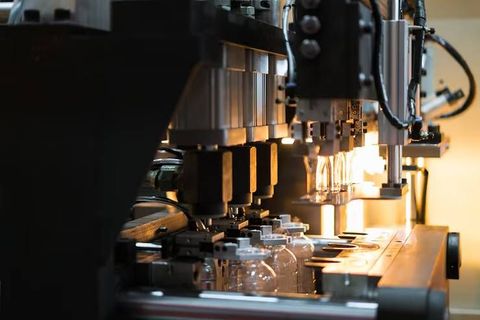
Juice filling machines are automated or semi-automated systems designed to transfer prepared juice and other liquid beverages into containers such as bottles, cartons, pouches, and cans. They form an important part of modern beverage packaging because accurate filling, hygienic handling, and consistent container sealing are essential for maintaining product quality.
The basic purpose of a filling machine is straightforward. Prepared juice reaches the filling area through a controlled product line. The machine positions the container, introduces a measured quantity of liquid, and then transfers it to the sealing or capping stage. More advanced systems can integrate rinsing, filling, capping, inspection, coding, and other operations into one production line.
Juice products can vary considerably in viscosity, pulp content, acidity, temperature, and formulation. Orange juice with pulp, apple juice, fruit beverages, nectar, and functional drinks may therefore require different filling arrangements.
A major development in this field is aseptic filling technology. Aseptic processing involves keeping the product, container, and filling environment under controlled hygienic conditions. In February 2026, industry reporting highlighted increasing interest in aseptic beverage filling, particularly for sensitive beverages where microbiological control and production flexibility are important.
Modern juice filling equipment may include programmable controls, sensors, automated cleaning systems, electronic monitoring, and data collection. These technologies help operators maintain consistent filling conditions while reducing manual intervention.
Why Juice Filling Machines Matter Today
The beverage industry has become more diverse, with manufacturers producing traditional juices alongside fruit drinks, plant-based beverages, functional drinks, and ready-to-drink products. This variety places greater demands on packaging equipment.
One important challenge is product consistency. A filling system needs to maintain an appropriate fill level across containers. Inaccurate filling can create quality variations and affect downstream packaging operations.
Another concern is food hygiene. Juice is a food product, so equipment surfaces that contact the beverage must be appropriate for food processing. Product pathways also need suitable cleaning and sanitation procedures.
Aseptic systems are particularly relevant to products that require strong microbiological control. The basic principle is to sterilize the product and container separately and bring them together under controlled conditions. India's Food Safety and Standards Authority of India proposed a 2026 definition describing aseptic packaging as filling a sterilized product into a sterilized container and sealing it in a sterile environment to prevent contamination.
Juice filling machines also affect production efficiency. Automated container handling and electronic controls can reduce repetitive manual activities and provide more consistent operating conditions.
The technology is relevant to several groups:
- Beverage manufacturers producing fruit-based drinks
- Food-processing facilities handling liquid products
- Packaging engineers designing beverage lines
- Quality-control teams monitoring filling accuracy
- Maintenance teams responsible for production equipment
- Food-safety professionals managing hygienic processing
- Engineering students learning about packaging automation
Modern equipment can also help manufacturers respond to different container formats. A flexible filling line may accommodate multiple bottle sizes or packaging configurations when the machine has suitable changeover capabilities.
Types of Juice Filling Machines
Juice filling equipment can be classified according to filling principle, automation level, container format, and product characteristics.
Gravity filling machines use the effect of gravity to transfer liquid into containers. They are generally associated with relatively free-flowing liquids and straightforward filling applications.
Volumetric filling machines measure a predetermined quantity of liquid before or during filling. This approach is useful where consistent volume is an important production parameter.
Piston filling systems use pistons to measure and move liquid. They can be suitable for products with greater viscosity or certain particulate characteristics, depending on the equipment design.
Flow-meter filling machines use flow measurement technology to monitor the quantity of liquid entering each container. Electronic controls can provide detailed process information.
Aseptic filling machines are designed for controlled sterile filling environments. They are particularly relevant to shelf-stable beverages and other sensitive liquid food products.
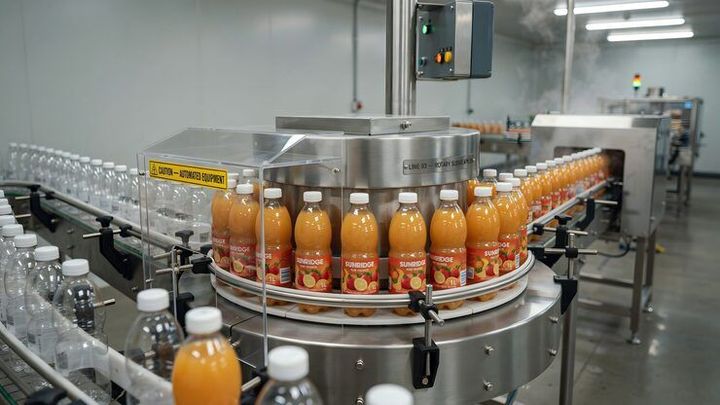
Rotary filling machines arrange multiple filling stations around a rotating platform. Containers move through different stages while the machine operates continuously.
Linear filling machines position containers along a straight production path. They can be appropriate for smaller or flexible production arrangements.
The correct configuration depends on juice characteristics, container design, production requirements, hygiene procedures, and the required level of automation.
Automation and Smart Beverage Production
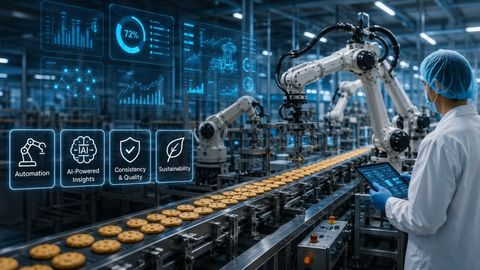
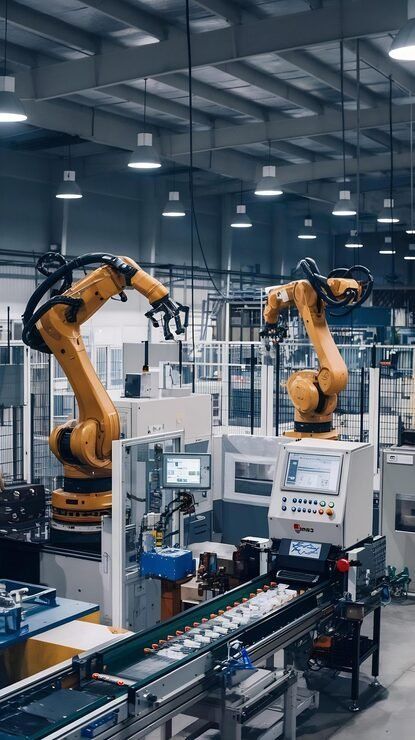
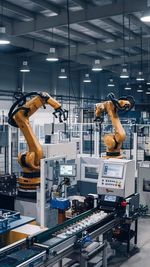
Automation is changing how juice filling lines are monitored and controlled. Instead of relying only on manual adjustments, modern equipment can use sensors and programmable control systems to monitor important operating parameters.
Common automation features include:
- Programmable logic controllers
- Touchscreen operator interfaces
- Liquid-level sensors
- Flow measurement systems
- Container detection sensors
- Automatic fault alerts
- Digital production records
- Automated cleaning sequences
- Container inspection systems
- Production-line monitoring
These technologies can provide operators with real-time information about machine status and process conditions.
Smart manufacturing also introduces greater use of data. Production information can be collected and reviewed to identify recurring stoppages, filling variations, cleaning requirements, or maintenance patterns.
However, automation does not remove the need for trained operators. Human oversight remains important for sanitation, quality verification, maintenance, troubleshooting, and compliance.
Aseptic Technology and Hygienic Filling
Aseptic technology is one of the most significant developments in modern juice packaging. Its objective is to maintain microbiological control throughout critical stages of processing and filling.
A typical aseptic system may involve several controlled steps:
- Product preparation and treatment
- Sterilization or commercially appropriate heat treatment
- Container sterilization
- Controlled transfer to the filling zone
- Aseptic filling
- Container sealing
- Inspection and monitoring
The exact process depends on the beverage formulation and packaging technology.
Aseptic packaging can be especially relevant for beverages that need extended shelf stability under appropriate storage conditions. Current industry analysis identifies juice, dairy beverages, plant-based drinks, and ready-to-drink products among applications associated with aseptic filling technology.
The important point is that aseptic filling is not simply a faster version of conventional filling. It requires carefully designed equipment, validated procedures, controlled environments, suitable packaging materials, and consistent sanitation practices.
Recent Technology Trends in Juice Filling
The period from 2025 to 2026 has seen continued attention toward automation, aseptic processing, flexible production, and improved process monitoring.
One notable trend is the development of filling systems that aim to combine higher throughput with greater flexibility. Industry reporting in February 2026 described efforts focused on faster changeovers, process stability, and control across the aseptic packaging chain.
Another trend is greater integration between filling machines and digital production systems. Sensors and programmable controls can provide data that supports quality monitoring and equipment maintenance.
Energy and resource management are also becoming important design considerations. Manufacturers increasingly examine water consumption during cleaning, compressed-air requirements, heating requirements, and overall equipment efficiency.
Packaging flexibility is another area of interest. Beverage producers may need to work with different bottle shapes, sizes, closures, and materials. Equipment that can accommodate controlled format changes can be useful where product portfolios are diverse.
Industry market research published in 2026 also indicates continuing expansion of interest in beverage aseptic filling equipment, with food and beverage applications representing a major part of the broader aseptic filling equipment landscape.
Laws and Food Packaging Policies in India
In India, juice filling and beverage packaging are connected with food-safety requirements administered by the Food Safety and Standards Authority of India (FSSAI).
The regulatory framework includes requirements relating to food products, packaging, labelling, food-business licensing, contaminants, additives, and advertising and claims. FSSAI maintains regulations under the Food Safety and Standards Act, 2006.
Packaging materials that come into contact with beverages are particularly important. Equipment and packaging components should be selected and managed according to applicable food-contact requirements.
During 2026, FSSAI published draft amendments relating to food packaging. A February 26, 2026 notification proposed additional definitions for terms including food-contact material, food-grade contact material, modified-atmosphere packaging, food packaging, non-intentionally added substances, and aseptic packaging.
FSSAI's 2026 regulatory archive also shows updates concerning food-business licensing, labelling and display, contaminants, and other food-safety matters.
Packaging waste is another consideration. India's Plastic Waste Management framework includes rules and amendments concerning plastic packaging and waste management.
Because regulations can change, beverage businesses should check the latest applicable notifications and requirements before designing or modifying a production line.
Tools and Resources for Juice Filling Operations
Several general tools can help with planning, monitoring, and learning about juice filling systems.
Filling-volume calculator:
A basic calculator can determine the required product volume from container size and planned production quantity.
Production-capacity worksheet:
A spreadsheet can estimate containers per minute, operating hours, planned downtime, and daily production requirements.
OEE calculator:
Overall Equipment Effectiveness calculations can help evaluate availability, performance, and quality.
CIP planning template:
A cleaning-in-place checklist can record cleaning stages, temperatures, durations, chemical parameters, and verification steps where applicable.
Preventive-maintenance checklist:
Maintenance schedules can track inspection of pumps, valves, sensors, seals, conveyors, filling nozzles, and control components.
Quality-control records:
Digital or paper forms can document fill volume, container integrity, product temperature, sanitation checks, and other relevant parameters.
Regulatory databases:
Government food-safety portals and official regulatory publications are useful for checking current requirements.
These resources should support, rather than replace, validated food-safety procedures and qualified technical guidance.
Frequently Asked Questions
What is a juice filling machine?
A juice filling machine is equipment that transfers a controlled quantity of juice or another liquid beverage into containers. Depending on the design, it may also integrate container handling, rinsing, capping, inspection, and coding.
What is aseptic juice filling?
Aseptic juice filling is a controlled packaging process in which appropriately sterilized product is filled into a sterilized container and sealed under controlled sterile conditions. The objective is to prevent contamination during the critical filling stage.
Which factors determine the right filling machine?
Important factors include juice viscosity, pulp content, acidity, temperature, container type, container size, required production rate, hygiene requirements, filling accuracy, and desired automation level.
Why is automation important in beverage filling?
Automation can improve process consistency, monitor operating conditions, reduce repetitive manual intervention, and provide production data. Human supervision remains necessary for quality, sanitation, maintenance, and safety.
Are juice filling machines regulated?
The machines themselves are part of a broader food-production environment. In India, beverage production and packaging must comply with applicable FSSAI requirements and other relevant regulations. Food-contact materials, labelling, hygiene, and product standards can all be important depending on the product and process.
Conclusion
Juice filling machines have developed from basic liquid-filling equipment into highly integrated systems supporting hygienic processing, automation, quality control, and flexible beverage production. Aseptic technology has become particularly important for applications requiring strong microbiological control and extended shelf stability under appropriate conditions.