Metal Embossing Machine: Precision Forming Technology and Applications
A metal embossing machine is industrial equipment designed to create raised or recessed designs on a metal surface. It forms patterns by applying controlled pressure through dies, rollers, or specially shaped tools. The process changes the surface geometry without necessarily cutting through the material.
Metal embossing is used to produce decorative textures, identification marks, functional surface patterns, and structured designs. Common applications include architectural panels, appliance components, equipment covers, automotive parts, nameplates, and industrial enclosures.
The final appearance depends on several factors, including the type of metal, sheet thickness, pattern depth, tooling design, and forming pressure. Proper coordination of these variables helps manufacturers achieve consistent results.
How Metal Embossing Works
The embossing process generally begins with preparing a metal sheet or strip. The material is positioned between a patterned tool and a matching die or between two forming rollers. Pressure then creates the intended surface design.
A typical production sequence includes:
Material preparation: The sheet is checked for thickness, surface defects, and suitability for forming.
Tool positioning: Dies or rollers are aligned with the required pattern.
Pressure application: The machine presses or rolls the pattern into the metal.
Pattern inspection: The embossed surface is checked for depth, alignment, and consistency.
Finishing: Depending on the application, the part may undergo cleaning, coating, trimming, or further forming.
Different machine configurations support different production requirements. Press-based systems are suitable for many detailed patterns, while roller-based systems can process long sheets or continuous strips efficiently.
Common Types of Metal Embossing Machines
The main machine categories differ in tooling, production method, and suitable applications.
Machine type | Main characteristics | Typical applications |
|---|---|---|
Mechanical press | Uses mechanical force and controlled tool movement | Repeated patterns and formed components |
Hydraulic press | Uses hydraulic pressure for controlled forming force | Thicker sheets and deeper patterns, within machine limits |
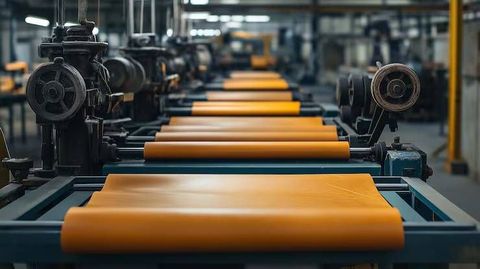
Roller embossing machine | Uses patterned rollers to form continuous surfaces | Textured sheets, strips, and decorative panels |
CNC-controlled system | Uses programmable controls for machine movements and settings | Repeatable patterns and automated production |
Manual or semi-automatic system | Requires greater operator involvement | Small batches, prototypes, and specialized components |
The appropriate system depends on production volume, material properties, pattern complexity, dimensional tolerances, and the required level of automation.
Importance of Metal Embossing in Modern Manufacturing
Why Precision Metal Forming Matters
Metal embossing supports industries that need durable components with consistent surface patterns. It can improve appearance, provide identification features, and create textures that serve practical purposes.
The process is especially useful when manufacturers need repeated patterns across multiple components. Properly designed embossing tools can maintain pattern alignment and reduce variation between production batches.
Its main advantages include:
Surface customization: Produces decorative finishes and recognizable patterns.
Component identification: Creates raised letters, numbers, symbols, and other markings.
Functional textures: Adds surface features that may improve grip or influence stiffness, depending on the design.
Repeatable production: Supports consistent patterns when tooling and machine settings remain controlled.
Material utilization: Forms patterns without removing material across the embossed area, although trimming and other secondary operations may still generate scrap.
Embossing does not automatically make every metal component stronger. The result depends on the material, pattern geometry, forming depth, and stresses introduced during production. Engineers must evaluate the finished part against its intended function.
Industries That Use Metal Embossing Technology
Metal embossing equipment is used in several manufacturing sectors.
Automotive manufacturing: Embossed metal appears in interior trim, identification plates, decorative components, and selected structural or functional parts.
Construction and architecture: Textured metal sheets are used for wall panels, ceilings, facades, roofing elements, and interior finishes.
Electrical and electronics manufacturing: Enclosures, equipment labels, and selected component housings may incorporate embossed markings or patterns.
Household appliances: Washing machines, refrigerators, kitchen equipment, and other appliances may use patterned sheet metal for appearance or surface design.
Industrial equipment: Machine guards, cabinets, control panels, and equipment covers can incorporate formed patterns or identification features.
Packaging and consumer products: Certain metal containers, decorative items, and specialized packaging components use embossing for visual distinction or tactile details.
Factors That Affect Embossing Quality
Manufacturers need to control several variables to achieve reliable results.
Material properties: Ductility, hardness, and tensile strength affect how the metal deforms.
Sheet thickness: Thickness influences forming force, pattern depth, and the likelihood of distortion.
Tool design: Die geometry, surface finish, and alignment influence pattern definition.
Pressure and speed: Incorrect settings may cause incomplete patterns, surface damage, or inconsistent results.
Lubrication: Where appropriate, suitable lubrication can reduce friction and tool wear.
Inspection methods: Visual checks and dimensional measurements help identify defects before components move to the next production stage.
Careful process planning is particularly important for stainless steel, aluminum, copper alloys, and other metals with different forming characteristics.
Recent Developments in Metal Embossing Technology
Automation and Digital Process Control
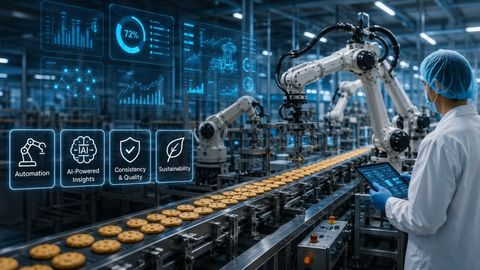
Metal forming technology continues to incorporate automation, programmable controls, and improved process monitoring. During 2025 and 2026, these broader manufacturing trends remained relevant to embossing equipment, although adoption differs across industries and individual factories.
Programmable controllers can coordinate machine movement, pressure settings, feed rates, and production sequences. Depending on the system, operators may also use sensors to monitor material positioning and machine conditions.
These capabilities can help manufacturers improve repeatability and identify process variation earlier. However, results depend on equipment configuration, maintenance, tooling quality, and operator training.
Computer-Aided Tool Design
Computer-aided design tools help engineers develop embossing patterns and evaluate die geometry before manufacturing the tooling. Simulation software can also help estimate deformation and identify areas where excessive thinning or wrinkling might occur.
Digital preparation is useful for intricate patterns and components with demanding dimensional requirements. Physical testing may still be necessary because simulations depend on material data, model assumptions, and boundary conditions.
Energy Efficiency and Predictive Maintenance
Manufacturers are increasingly examining energy use, machine uptime, and equipment reliability. For embossing systems, relevant improvements can include more efficient drives, reduced idle operation, condition monitoring, and planned maintenance.
Predictive maintenance uses information such as vibration, temperature, operating cycles, and hydraulic conditions to identify possible equipment problems. It can support maintenance planning, but it does not eliminate breakdowns or replace routine inspections.
Quality Monitoring and Traceability
Modern production environments may combine digital inspection records with machine operating data. Recording material batches, tool changes, production settings, and inspection results can help teams investigate defects and trace their causes.
No single technology guarantees defect-free production. Reliable outcomes still require appropriate materials, validated settings, competent operators, and consistent quality checks.
Laws, Regulations, and Manufacturing Standards
Workplace Safety Requirements
Metal embossing machines contain moving parts and may generate substantial force. Poorly controlled access to the forming area can expose workers to crushing, pinch-point, and other mechanical hazards.
In India, manufacturers and operators should consider applicable occupational safety legislation, factory rules, machinery requirements, and relevant state-level provisions. The Occupational Safety, Health and Working Conditions Code, 2020, forms part of India's occupational safety framework; its applicability must be assessed alongside commencement notifications and other applicable legislation in force at the relevant time.
Common safety measures include:
Installing suitable guards around dangerous moving components.
Using appropriate interlocks and emergency-stop systems.
Applying lockout procedures before maintenance or tool changes.
Training operators in safe material handling and machine operation.
Inspecting hydraulic, electrical, mechanical, and control systems.
Providing suitable personal protective equipment for identified hazards.
Employers should verify current legal requirements with qualified safety personnel and the relevant authorities rather than assuming that a general checklist satisfies every obligation.
Product Quality and Technical Standards
Manufacturers may use documented quality-management systems and applicable material or dimensional standards to support consistent production. Requirements depend on the finished component, its intended use, and the destination market.
Relevant considerations include:
Material specifications and traceability.
Dimensional tolerances and pattern-depth requirements.
Surface-finish and visual-acceptance criteria.
Machine risk assessments and safety documentation.
Inspection records and production-process controls.
International standards concerning quality management, machinery safety, and risk assessment may be relevant where adopted or contractually required. Compliance should be determined against the specific standard, its current edition, and the applicable legal framework.
Tools and Resources for Metal Embossing
Design and Engineering Tools
Digital design and manufacturing tools help engineers plan patterns, evaluate tooling, and document production requirements. Useful categories include:
CAD software: Develops embossing patterns, die layouts, and component drawings.
Forming simulation tools: Help assess deformation, material thinning, and possible forming defects.
Production calculators: Estimate forming force, material usage, sheet dimensions, and cycle requirements using appropriate engineering assumptions.
Measurement instruments: Calipers, micrometers, depth gauges, and profile measurement equipment help verify finished dimensions.
Maintenance checklists: Record inspections, lubrication, tool condition, and machine operating hours.
Quality-control templates: Document material batches, process settings, inspection results, and corrective actions.
The accuracy of calculations depends on reliable material properties, machine specifications, and suitable engineering methods. Complex parts may require specialist analysis and physical trials.
Practical Checklist for Selecting Equipment
Before choosing a metal embossing machine, manufacturers should review the intended application and operating environment.
Selection factor | What to evaluate |
|---|---|
Material | Metal type, hardness, ductility, and thickness |
Pattern | Shape, depth, size, and complexity |
Production volume | Batch size and expected operating frequency |
Precision | Required dimensional tolerances and repeatability |
Automation | Manual loading, automatic feeding, and control features |
Safety | Guarding, interlocks, emergency stops, and maintenance access |
Quality control | Inspection methods and recordkeeping requirements |
A structured assessment helps prevent mismatches between machine capability and production needs. Equipment selection should consider the complete manufacturing process, including material handling, tooling changes, inspection, and finishing.
Frequently Asked Questions
What is the main purpose of a metal embossing machine?
Its main purpose is to create raised or recessed patterns on metal surfaces. These patterns may be decorative, identifying, or functional, depending on the component's design and intended use.
Which metals can be embossed?
Common materials include aluminum, stainless steel, mild steel, copper, and selected metal alloys. Suitability depends on thickness, ductility, hardness, pattern depth, and the machine's forming capacity. Material testing may be necessary for demanding applications.
What is the difference between metal embossing and metal engraving?
Embossing generally forms a raised or recessed pattern by deforming the metal surface. Engraving typically removes material using a cutting tool, laser, or another suitable process. The two methods produce different surface characteristics and may serve different design requirements.
How can manufacturers maintain consistent embossing quality?
Consistency depends on properly aligned tooling, suitable machine settings, stable material quality, regular maintenance, and documented inspection procedures. Monitoring pattern depth and checking for cracks, distortion, and surface defects can help identify problems early.
Is automation necessary for metal embossing?
Automation is not essential for every application. Manual and semi-automatic machines can suit smaller batches or specialized work, while automated systems may be appropriate for frequent production and consistent part handling. The decision depends on production requirements, complexity, safety, and process-control needs.
Conclusion
Metal embossing machines play an important role in modern sheet metal forming by creating repeatable surface patterns without removing material across the embossed area. Their applications extend from architectural panels and household appliances to industrial enclosures, automotive components, and identification plates.