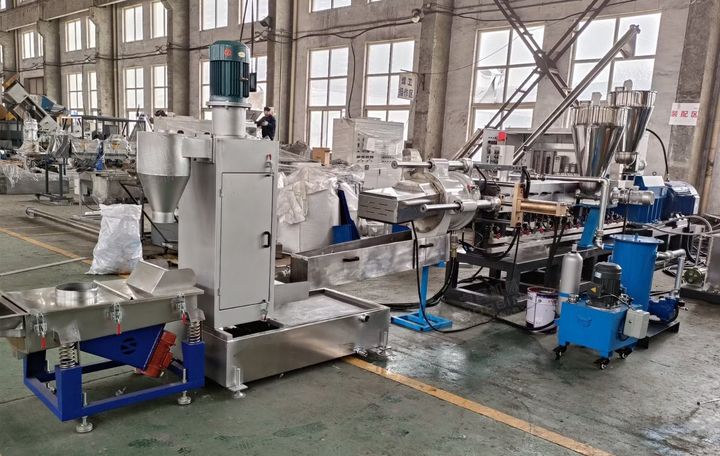
Plastic Granule Making Machines: Recycling Technology, Process & Applications
Plastic granule making machines are industrial recycling systems designed to convert processed plastic waste into small, uniform plastic granules. These granules can then become raw material for selected plastic manufacturing processes.
The technology exists because plastic waste can remain in the environment for long periods when it is not properly managed. Mechanical recycling provides one pathway for recovering usable material from suitable plastic waste streams.
A typical plastic recycling line may include several stages:
- Waste plastic sorting
- Size reduction or shredding
- Washing and cleaning
- Moisture removal
- Plastic extrusion
- Filtration
- Cooling
- Pelletizing or granulation
- Screening and storage
The exact configuration depends on the plastic type, contamination level, feedstock form, and required granule characteristics.
Common materials processed through mechanical recycling include polyethylene (PE), polypropylene (PP), polyethylene terephthalate (PET), and certain other thermoplastics. Different polymers require different processing conditions, so material identification and segregation are important.
Plastic granules may be produced from post-consumer or post-industrial plastic streams. Post-consumer material comes from products discarded after use, while post-industrial material can originate from manufacturing activities.
Why Plastic Granule Recycling Matters Today
Plastic waste management has become an important environmental and industrial issue. Growing plastic consumption creates a continuing need for collection, sorting, recovery, and responsible processing.
Plastic granule making machines contribute to this circular approach by converting suitable waste into a secondary material that can enter another manufacturing cycle.
The technology can help address several challenges:
- Reduction of plastic waste sent for disposal
- Recovery of useful polymer material
- Better utilization of suitable waste streams
- Support for recycled-content targets
- Development of circular manufacturing practices
- Improved material segregation and traceability
The quality of recycled granules depends heavily on the quality of the incoming waste. Clean and properly separated material generally provides more predictable results than mixed or heavily contaminated plastic.
For industries using recycled polymers, important characteristics can include melt flow behavior, moisture level, color, contamination, density, and polymer composition.
Who Uses This Technology?
Plastic recycling technology is relevant to a wide range of industries and organizations, including:
- Plastic product manufacturers
- Packaging manufacturers
- Recycling facilities
- Material recovery operations
- Industrial manufacturing units
- Waste management organizations
- Research and development laboratories
The final application depends on the polymer and the quality specifications of the recycled granules.
How the Plastic Granule Making Process Works
The recycling process usually follows a sequence of mechanical and thermal operations. Each stage affects the quality of the final material.
Sorting and Material Identification
Plastic waste is first separated according to polymer type, color, form, or contamination level.
Accurate sorting is important because different polymers have different melting and processing characteristics. Mixing incompatible materials can reduce the consistency of the final granules.
Shredding and Size Reduction
Large plastic items are reduced into smaller pieces using shredders, crushers, or granulators.
Smaller pieces are easier to wash and process. Size reduction also helps create a more consistent feedstock for later stages.
Washing and Cleaning
The shredded plastic may contain dust, labels, food residues, oils, adhesives, or other contaminants.
Washing systems remove unwanted materials using water, mechanical action, detergents where appropriate, and controlled separation methods.
The cleaning requirements vary according to the source of the plastic waste.
Drying and Moisture Removal
After washing, plastic needs appropriate moisture removal before thermal processing.
Drying equipment may use mechanical dewatering, heated air, centrifugal systems, or combinations of these technologies.
Moisture control is particularly important for polymers that are sensitive to hydrolysis during processing.
Extrusion and Melting
Clean plastic enters an extruder, where controlled heat and mechanical pressure soften or melt the polymer.
An extrusion system normally includes a screw, barrel, heating zones, and temperature-control mechanisms.
The operating conditions depend on the polymer being processed. Proper temperature control helps maintain material consistency and avoid unnecessary thermal degradation.
Filtration and Melt Cleaning
Before pelletizing, molten plastic can pass through a filtration system.
The filter removes remaining solid contaminants from the melt. Continuous or automatic filtration systems may be used where the incoming material requires ongoing contamination control.
Cooling and Pelletizing
The filtered polymer is formed into strands or another controlled shape and cooled.
A pelletizer then cuts the material into small granules. Depending on the recycling line, strand pelletizing, water-ring pelletizing, or other configurations may be used.
The final granules are screened and stored according to quality requirements.
Key Technologies Used in Plastic Granulation
Modern plastic recycling systems combine mechanical, thermal, electrical, and control technologies.
| Technology | Main Function | Typical Benefit |
|---|---|---|
| Shredder | Reduces large plastic pieces | Consistent feed size |
| Washing unit | Removes contamination | Cleaner feedstock |
| Dryer | Removes moisture | Better processing stability |
| Extruder | Melts and homogenizes polymer | Continuous material processing |
| Melt filter | Removes solid impurities | Improved material cleanliness |
| Pelletizer | Cuts polymer into granules | Uniform material form |
| Control system | Monitors operating parameters | Better process control |
Automation can also support temperature monitoring, motor control, pressure monitoring, material feeding, and production data collection.
Recent Developments and Trends
Plastic recycling technology has continued to evolve during 2025 and 2026, with greater attention on traceability, recycled content, digital reporting, and more effective waste processing.
In India, the Ministry of Environment, Forest and Climate Change reported that the Plastic Waste Management (Amendment) Rules, 2025 were notified on January 23, 2025. The amendment introduced provisions allowing specified packaging information to be provided through methods such as barcodes or QR codes from July 1, 2025, along with additional compliance provisions.
Another significant development occurred on March 31, 2026, when the Plastic Waste Management (Amendment) Rules, 2026 were notified. The amendment followed a draft notification issued in June 2025 and further updated the Plastic Waste Management Rules, 2016.
Digital monitoring is also becoming more important. India's plastic waste framework includes an online EPR portal, national dashboard, reporting systems, and resources for plastic waste characterization.
These developments indicate a broader shift toward measurable recycling, documented material flows, and stronger accountability across plastic packaging systems.
Laws and Policies Affecting Plastic Recycling in India
In India, plastic recycling activities are influenced by the Plastic Waste Management Rules, 2016, and subsequent amendments.
The Extended Producer Responsibility framework is particularly important for plastic packaging. It establishes responsibilities relating to plastic packaging waste and supports formal mechanisms for collection, recycling, reporting, and compliance.
The 2025 amendment also introduced a specific provision concerning contraventions, linking non-compliance with penalties under Section 15 of the Environment (Protection) Act, 1986.
For organizations involved in plastic recycling, regulatory considerations may include:
- Registration requirements applicable to the activity
- Documentation of recycled material
- EPR-related requirements
- Waste processing records
- Environmental compliance
- Material traceability
- Applicable state pollution control requirements
The exact obligations depend on the organization's role, material type, processing activity, and location. Regulatory requirements should therefore be checked against the latest central and state rules before implementation.
Tools and Resources for Plastic Recycling
Several categories of tools can help users understand, plan, monitor, and evaluate plastic recycling operations.
Useful Technical Tools
- Polymer identification guides
- Moisture measurement instruments
- Melt flow testing equipment
- Material density calculators
- Granule size analysis tools
- Energy monitoring systems
- Temperature and pressure monitoring instruments
- Production tracking templates
Learning and Compliance Resources
General users can also refer to:
- Government environmental regulations
- Pollution control authority portals
- Plastic waste management dashboards
- EPR reporting platforms
- Recycling process manuals
- Polymer technical datasheets
- Waste characterization guidelines
- Environmental compliance checklists
These resources can help organizations understand material requirements, documentation practices, and applicable environmental frameworks.
Frequently Asked Questions
What is a plastic granule making machine?
A plastic granule making machine is an industrial system that processes suitable plastic waste into small reusable polymer granules. The process can include shredding, washing, drying, extrusion, filtration, cooling, and pelletizing.
Which plastics can be converted into granules?
Several thermoplastic materials can be mechanically recycled, including PE, PP, and PET, depending on the equipment and process configuration. Different polymers should generally be separated because they have different processing characteristics.
Why is plastic sorting important?
Sorting separates different polymer types and removes unsuitable materials. Better sorting can improve feedstock consistency and help produce more predictable recycled granules.
What affects recycled granule quality?
Important factors include polymer identification, contamination, moisture, processing temperature, filtration, residence time, cooling conditions, and the condition of the incoming plastic.
Are recycled plastic granules suitable for every application?
No. Suitability depends on the polymer, recycled material quality, required physical properties, contamination level, and application requirements. Some applications may require additional testing or controlled blending with other materials.
Conclusion
Plastic granule making machines play an important role in mechanical plastic recycling by converting suitable plastic waste into a reusable material form. The overall process normally involves sorting, size reduction, washing, drying, extrusion, melt filtration, cooling, and pelletizing.