Coffee Maker Machines Guide: Types, Technology & Smart Brewing Trends
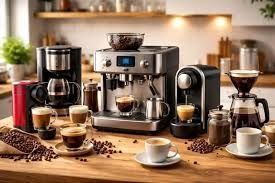
Coffee maker machines are appliances designed to prepare coffee by controlling key brewing factors such as water temperature, flow rate, extraction time, and pressure. They range from simple drip coffee machines to advanced espresso systems with integrated grinders and digital controls.
The basic purpose of these machines is to make coffee preparation more consistent and convenient. Traditional preparation depends heavily on manual measurements and timing. A modern machine can automate several of these steps while allowing users to adjust brewing preferences.
Common machine categories include:
- Drip coffee makers for filter-based brewing
- Espresso machines that use pressure to extract coffee
- Capsule and pod machines designed for convenient portioned brewing
- French press-style electric systems
- Automatic bean-to-cup machines with integrated grinders
- Commercial coffee and beverage dispensing machines
- Smart coffee makers with programmable or connected controls
The technology used varies considerably between models. Some systems focus on brewing temperature and extraction, while others combine grinding, dosing, milk preparation, cleaning cycles, and digital controls.
Why Coffee Maker Technology Matters Today
Coffee preparation has become increasingly technology-driven. Users often look for consistency, precise controls, energy awareness, and easier maintenance rather than simply heating water and brewing ground coffee.
For households, coffee machines can simplify daily preparation. In offices, hospitality environments, and other shared spaces, larger systems can support repeated brewing while maintaining standardized settings.
Modern coffee machines can address several practical challenges:
- Maintaining a stable brewing temperature
- Controlling water flow during extraction
- Reducing variations between brewing cycles
- Automating grinding and coffee dosing
- Managing programmable brewing schedules
- Monitoring water levels
- Providing automatic cleaning reminders
- Reducing unnecessary standby operation
Temperature control is particularly important because water that is too cool or too hot can affect extraction. Pressure is also a major factor in espresso preparation, where controlled water pressure moves through finely ground coffee.
For people interested in coffee equipment, understanding these technologies makes it easier to compare machines based on actual functionality rather than appearance alone.
Major Types of Coffee Maker Machines
Drip Coffee Machines
Drip machines heat water and distribute it over ground coffee held in a filter. The brewed coffee then flows into a carafe or insulated container.
They are commonly associated with batch brewing and are useful when several cups need to be prepared together. Programmable timers, automatic shutoff, warming systems, and insulated containers are common features.
Espresso Machines
Espresso machines use pressure to force heated water through finely ground coffee. They are designed for concentrated coffee extraction and can form the foundation for beverages such as cappuccino and latte.
Different systems use varying levels of automation. Manual machines provide greater control, while automatic systems can manage grinding, dosing, extraction, and other stages electronically.
Capsule and Pod Machines
These machines use pre-portioned coffee capsules or pods. The enclosed portion simplifies preparation because the amount of coffee is already measured.
Their operation can be straightforward, with automated water heating, pressure control, and programmed brewing cycles. The main considerations include compatibility, waste management, machine maintenance, and brewing flexibility.
Bean-to-Cup Machines
Bean-to-cup machines integrate a grinder with the brewing system. Whole coffee beans are ground immediately before preparation, after which the machine automatically handles several brewing stages.
Advanced models can allow users to adjust grind size, coffee strength, water quantity, temperature, and other parameters.
Commercial Dispensing Machines
Commercial dispensing systems are designed for repeated beverage preparation in environments where machines may operate frequently. They can include coffee brewers, espresso systems, hot beverage dispensers, and vending equipment.
Safety requirements for these machines can differ from those applying to ordinary household appliances.
Smart Brewing Technology
Smart coffee machines increasingly combine conventional brewing technology with electronic controls and connected features.
Digital displays can provide information about temperature, brewing settings, cleaning requirements, and water levels. Some systems can store personalized brewing profiles so different users can select preferred settings.
Connected systems may also communicate with mobile applications or other digital platforms. Depending on the design, users may be able to schedule brewing, monitor machine status, or adjust settings remotely.
Artificial intelligence and advanced automation are also influencing appliance development. In practical terms, the most useful applications are likely to involve adaptive settings, maintenance monitoring, and more accurate control of brewing variables rather than replacing the fundamental brewing process.
Technology Comparison
| Technology | Main Function | Typical Benefit |
|---|---|---|
| Temperature control | Regulates brewing heat | More consistent extraction |
| Pressure control | Controls water pressure | Supports espresso preparation |
| Integrated grinder | Grinds beans automatically | Fresh grinding workflow |
| Programmable timer | Automates brewing schedules | Convenient preparation |
| Digital controls | Manages settings | Easier adjustment |
| Connectivity | Links machine with digital devices | Remote monitoring |
| Auto-cleaning | Automates cleaning cycles | Easier maintenance |
| Energy management | Controls standby operation | Reduced unnecessary power use |
Recent Technology and Regulatory Developments
The coffee machine industry has continued moving toward automation, energy management, and improved safety.
In the European Union, Commission Regulation (EU) 2023/826 includes power-management requirements for household coffee machines. For example, the regulation specifies maximum periods before certain household coffee machines enter standby or off-mode conditions, depending on their design. The rules became applicable in 2025.
Safety remains another important development area. Recent industry reporting has highlighted greater attention to temperature control, flow paths, blockage prevention, and protection against burns in single-serve coffee machine designs.
India has also been updating its electrical-appliance regulatory framework. The Safety of Household, Commercial and Similar Electrical Appliances (Quality Control) Order, 2026 was issued on April 6, 2026, replacing the 2025 order and establishing updated requirements for covered electrical appliances.
Commercial dispensing and vending appliances have also received specific regulatory attention in India. An earlier quality-control framework specified IS 302 (Part 2/Sec 75):2018 for electrical appliances used for commercial dispensing and vending, with implementation beginning in 2025.
These developments show that coffee machine technology is being influenced not only by convenience but also by energy efficiency, electrical safety, and product conformity.
Laws, Standards, and Policies in India
Coffee maker machines can fall under different requirements depending on their design, electrical characteristics, and intended application.
For electrical safety, Indian Standard IS 302-2-15 addresses appliances designed to heat liquids, including coffee makers. The standard covers areas such as electrical, thermal, and mechanical safety.
Commercial dispensing and vending equipment can fall under separate requirements. The relevant Indian framework has included IS 302 (Part 2/Sec 75):2018 for commercial dispensing appliances and vending machines.
Food safety rules become relevant when coffee preparation is part of a food business. The Food Safety and Standards Authority of India states that food businesses must implement an appropriate Food Safety Management System and follow applicable hygiene requirements under its regulatory framework.
This distinction is important. A household appliance used privately is not necessarily regulated in exactly the same way as a commercial dispensing system operating in a food establishment.
Organizations should therefore check the latest applicable Indian standards, conformity requirements, electrical rules, and food-safety obligations before introducing commercial coffee equipment.
Tools and Resources for Understanding Coffee Machines
Several general resources can help users understand coffee equipment and brewing technology.
Brewing Calculators
Coffee-to-water ratio calculators can help estimate the quantity of ground coffee and water needed for a particular brewing method. Extraction calculators can also help users understand variables such as brewing time and strength.
Energy Calculators
An appliance energy calculator can estimate electricity consumption based on rated power, operating time, and usage frequency. This can help compare different operating patterns.
Maintenance Checklists
A simple maintenance template can track:
- Water-filter replacement
- Descaling intervals
- Brew-group cleaning
- Grinder cleaning
- Drip-tray cleaning
- Milk-system cleaning
- Electrical inspection requirements
Product Manuals and Standards Documents
Technical manuals provide information about machine capacity, electrical ratings, operating procedures, cleaning requirements, and safety precautions. Standards documents provide a deeper understanding of applicable technical requirements.
Brewing Logs
A basic brewing log can record grind setting, coffee quantity, water quantity, temperature, extraction time, and user observations. This can help identify which settings produce more consistent results.
Frequently Asked Questions
What is the main purpose of a coffee maker machine?
A coffee maker machine controls the preparation process by heating water and managing its interaction with ground coffee. Different machine types use different brewing methods, including filtration, pressure extraction, and automated dispensing.
Which coffee machine is suitable for beginners?
Drip coffee machines and straightforward automatic systems are generally easier to operate because they automate several brewing steps. The appropriate choice depends on the user's preferred coffee style and desired level of control.
Are smart coffee makers connected to mobile devices?
Some modern machines include wireless connectivity and mobile-app integration. Depending on the model, connected features may include scheduling, machine-status information, user profiles, or brewing controls.
Why is temperature control important?
Water temperature affects coffee extraction. Stable temperature management can help produce more consistent results, while inappropriate temperatures can influence flavor, strength, and extraction balance.
Do commercial coffee machines have different safety requirements?
Yes. Commercial dispensing and vending equipment can be subject to requirements that differ from household appliances. In India, specific standards address commercial dispensing appliances and vending machines.
Conclusion
Coffee maker machines have developed from simple heating and filtration appliances into sophisticated brewing systems with automation, electronic controls, integrated grinders, energy-management functions, and connected technology.