Flexible Manufacturing Systems Guide: Smart Automation for Modern Industries
Flexible Manufacturing Systems, commonly called FMS, are automated production environments designed to manufacture different products or product variations with minimal changes to equipment and production arrangements. An FMS typically combines programmable machines, automated material handling, computer-based controls, sensors, and production planning software.
Traditional manufacturing systems are often designed around fixed production routines. Changing from one product to another may require significant machine adjustments, tooling changes, or manual intervention. Flexible manufacturing addresses this limitation by allowing equipment and production processes to adapt to changing requirements.
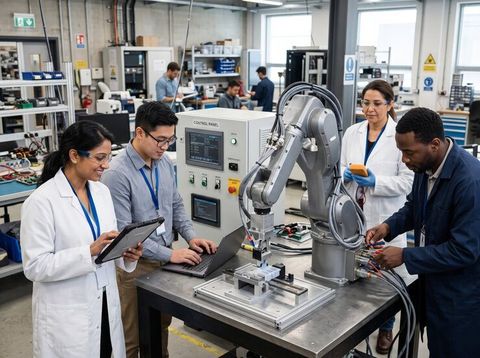
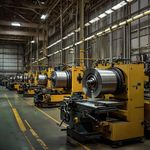
An FMS can include computer numerical control machines, industrial robots, automated storage systems, conveyors, inspection equipment, sensors, and centralized or distributed control systems. These components work together to coordinate production activities.
The concept became important as manufacturers needed greater production flexibility without sacrificing consistency. Modern industries may need to handle smaller production batches, customized products, frequent design changes, and rapidly changing market requirements. Flexible automation helps create a production environment capable of responding to these conditions.
A typical FMS contains several connected elements:
- Computer-controlled manufacturing machines
- Automated material handling equipment
- Robots for loading, unloading, or assembly
- Sensors for monitoring production conditions
- Machine vision and inspection systems
- Production scheduling and monitoring software
- Centralized data collection and control systems
The level of flexibility varies between systems. Some are designed for a limited group of similar components, while advanced systems can accommodate a wider range of products and production sequences.
Why Flexible Manufacturing Systems Matter Today
Manufacturing is becoming increasingly data-driven. Customers and industrial supply chains can require product variations, shorter production cycles, consistent quality, and faster responses to changing demand.
This makes manufacturing automation and flexible production systems increasingly relevant.
An important advantage of FMS is its ability to support product variety. Instead of designing an entirely separate production arrangement for every product, manufacturers can configure programmable equipment to handle different operations.
FMS can also improve production coordination. Machines, robots, material handling systems, and inspection equipment can exchange information through connected control systems. This creates greater visibility into production activities.
The technology can be particularly relevant to industries such as:
- Automotive manufacturing
- Aerospace components
- Electronics production
- Medical equipment manufacturing
- Precision engineering
- Industrial machinery
- Consumer products
- Metalworking and machining
Flexible systems can also help address production bottlenecks. Automated material movement, coordinated machine scheduling, and real-time monitoring can reduce unnecessary waiting between production stages.
However, flexibility does not automatically guarantee better manufacturing performance. Successful implementation depends on suitable process design, equipment compatibility, workforce skills, data quality, maintenance planning, and cybersecurity.
Key Benefits of Flexible Manufacturing
| Area | Potential Contribution |
|---|---|
| Product variety | Supports multiple product configurations |
| Automation | Reduces repetitive manual activities |
| Production planning | Helps coordinate machines and workflows |
| Quality control | Enables automated inspection and monitoring |
| Material handling | Coordinates movement between production stages |
| Data visibility | Provides operational information for analysis |
| Scalability | Allows production systems to evolve over time |
The economic value of automation is also receiving greater attention. A 2025 smart manufacturing survey reported that manufacturers were prioritizing process automation, factory automation hardware, sensors, analytics, industrial IoT, and artificial intelligence as part of broader modernization programs.
How an FMS Works
An FMS generally begins with production planning. A manufacturing execution or control layer determines which products need to be produced and what operations are required.
The system then coordinates machines and material handling equipment according to the production sequence.
For example, a component may first move to a machining center. After machining, an automated handling system can transfer it to another machine for drilling or finishing. An inspection station can then check selected characteristics before the component moves to the next stage.
Sensors continuously provide information about machine status, material movement, and production conditions.
A simplified FMS workflow can be represented as:
Production Planning → Material Handling → Automated Processing → Inspection → Data Collection → Production Decision
The system may use CNC equipment, robots, programmable logic controllers, sensors, industrial networks, and production databases.
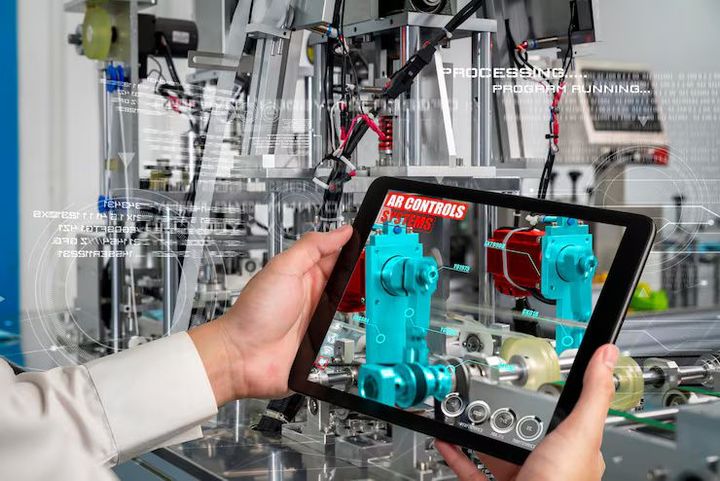
Modern smart manufacturing environments can add cloud computing, edge computing, artificial intelligence, digital twins, machine vision, and predictive analytics. These technologies can make an FMS more connected and responsive.
Recent Developments in Flexible Manufacturing
The past year has seen continued interest in smart manufacturing, industrial automation, artificial intelligence, robotics, and connected production systems.
In May 2025, research into smart manufacturing highlighted increasing attention to factory automation hardware, active sensors, vision systems, industrial IoT, cloud computing, data analytics, and AI. The findings also showed that manufacturers were placing greater emphasis on cybersecurity and workforce development as automation expanded.
Another important development occurred in India in October 2025. NITI Aayog introduced a roadmap for advanced manufacturing that identified artificial intelligence and machine learning, advanced materials, digital twins, and robotics as important technologies across priority manufacturing sectors.
These developments indicate a shift from isolated automation toward interconnected manufacturing ecosystems.
Artificial intelligence is also becoming more relevant. AI can analyze production data, identify unusual patterns, support predictive maintenance, and assist with quality inspection. However, AI should complement appropriate engineering controls rather than replace safety procedures or qualified human decision-making.
Digital twins are another emerging technology. A digital twin creates a digital representation of a physical machine, process, or production environment. Manufacturers can use simulations and operational data to study production behavior before making changes to physical systems.
Cybersecurity is equally important. Connecting machines to industrial networks increases the number of digital connections that need protection. Access controls, network segmentation, secure software updates, monitoring, and appropriate backup practices can help reduce operational risks.
Laws and Policies Affecting Manufacturing Automation in India
Flexible Manufacturing Systems in India operate within a broader regulatory environment covering workplace safety, manufacturing operations, environmental requirements, data protection, electrical safety, and industrial standards.
The Occupational Safety, Health and Working Conditions Code, 2020 is particularly relevant to industrial workplaces. It consolidates legislation relating to occupational safety, health, and working conditions. The Ministry of Labour and Employment has published central rules and implementation information, with further regulatory developments continuing through 2025 and 2026.
For automated factories, safety planning should consider machinery hazards, robot movement, electrical systems, emergency procedures, maintenance activities, and worker interaction with automated equipment.
India also announced the National Manufacturing Mission in the Union Budget 2025–26. The initiative focuses on areas including technology availability, workforce readiness, MSME development, quality manufacturing, and manufacturing ecosystem development.
By February 2026, government updates indicated that implementation work was progressing through consultation, technology access, workforce readiness, MSME development, and related manufacturing initiatives.
Manufacturers should also review applicable state-level factory rules, environmental requirements, electrical standards, machinery safety requirements, and sector-specific regulations before deploying an automated production system.
Tools and Resources for Flexible Manufacturing
Several categories of tools can help organizations understand, design, monitor, or improve flexible manufacturing environments.
Production Planning Tools
Production planning applications can help organize manufacturing schedules, machine availability, material requirements, and production sequences.
Simulation Software
Manufacturing simulation tools allow engineers to model machine layouts, material movement, production capacity, and potential bottlenecks before making physical changes.
Industrial Monitoring Systems
Industrial monitoring platforms collect information from machines, sensors, controllers, and production equipment. They can provide dashboards showing machine status and production performance.
Digital Twin Platforms
Digital twin technologies can create virtual representations of machines and manufacturing processes. They are useful for simulation, analysis, and process improvement.
Machine Vision Tools
Machine vision systems use cameras and image-processing techniques to inspect components, identify defects, measure dimensions, or verify assembly conditions.
Maintenance Analytics
Maintenance dashboards and predictive analytics tools can analyze machine data to identify abnormal behavior and support planned maintenance activities.
Learning Resources
Useful educational resources include manufacturing engineering textbooks, industrial automation training materials, standards documentation, technical manuals, process-mapping templates, equipment documentation, and safety checklists.
A practical evaluation can compare factors such as machine utilization, changeover time, throughput, quality results, downtime, material movement, maintenance requirements, and system availability.
Frequently Asked Questions About Flexible Manufacturing Systems
What is a Flexible Manufacturing System?
A Flexible Manufacturing System is an automated production arrangement that uses programmable machines, material handling equipment, computer controls, and related technologies to manufacture different products or product variations.
What are the main components of an FMS?
Common components include CNC machines, robots, automated material handling equipment, sensors, controllers, inspection systems, production software, and communication networks.
How is FMS different from traditional manufacturing?
Traditional production systems may depend more heavily on fixed processes and manual adjustments. FMS uses programmable equipment and coordinated automation to make production changes more manageable.
Is FMS suitable for every manufacturing environment?
No. Suitability depends on production volume, product variety, process complexity, equipment requirements, workforce capabilities, facility layout, and automation objectives. A detailed process assessment should be completed before implementation.
How does AI relate to flexible manufacturing?
AI can analyze production data, support quality inspection, identify unusual machine behavior, and assist production planning. Its usefulness depends on data quality, suitable integration, cybersecurity, and appropriate human oversight.
Conclusion
Flexible Manufacturing Systems are an important part of modern industrial automation because they combine programmable production equipment, automated material handling, monitoring technologies, and computer-based control.