Industrial Automated Warehouse Machines: AI, Robotics, AS/RS & Smart Automation Guide
Industrial warehouse automation refers to the use of machines, robotics, control systems, sensors, and software to perform or support warehouse activities with limited manual intervention. These technologies can manage tasks such as receiving, storing, sorting, picking, packing, transporting, and retrieving materials.
The technology exists because modern warehouses often handle large product volumes across multiple storage locations. Manual processes can become difficult to coordinate when inventory changes frequently or when operations run for extended hours. Automated systems provide a structured way to move materials and maintain information about inventory locations.
Several machine categories are commonly used in automated warehouses:
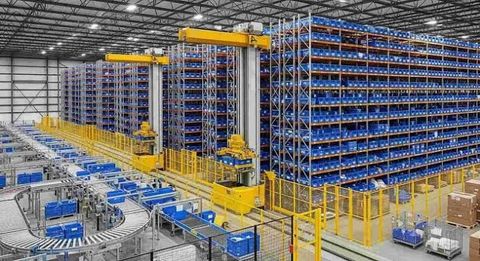
- Automated Storage and Retrieval Systems (AS/RS)
- Autonomous Mobile Robots (AMRs)
- Automated Guided Vehicles (AGVs)
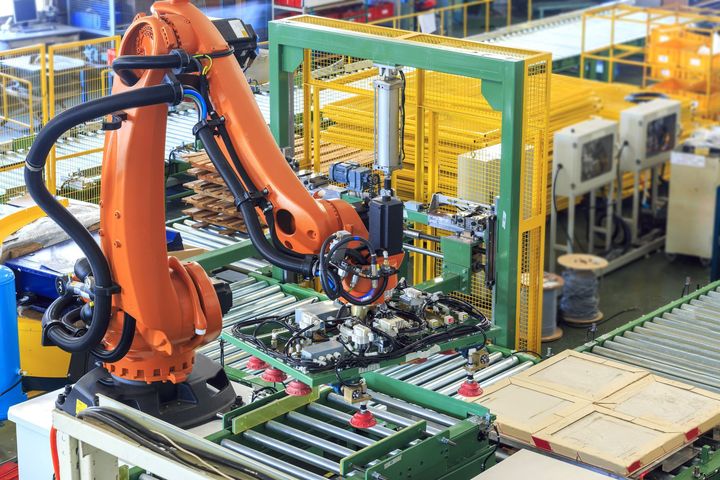
- Robotic picking and palletizing systems
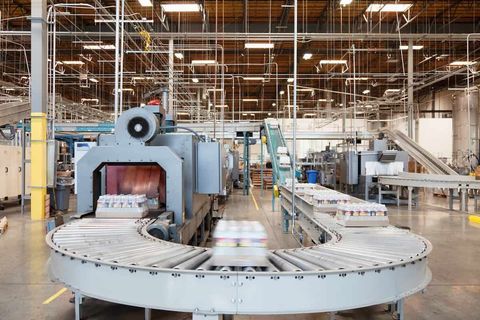
- Conveyor and sorting systems
- Vertical lift modules
- Robotic storage systems
- Automated forklifts
- Machine-vision inspection systems
- Warehouse control and management software
AI is increasingly connected with these technologies. Machine-learning algorithms can analyze operational data, while computer vision can help machines identify objects, locations, packages, and potential obstacles.
An automated warehouse does not necessarily mean that every activity is performed by machines. Many facilities use a hybrid approach where people and automated equipment work together.
Why Automated Warehouse Machines Matter Today
The growth of e-commerce, manufacturing complexity, global supply networks, and demand for faster inventory movement has increased interest in warehouse automation. Manufacturers, distributors, retailers, and logistics operators can use automation to organize high-volume material flows and improve operational visibility.
One important advantage is consistency. Automated equipment can follow predefined movement paths, storage rules, and picking instructions. This can help reduce avoidable handling errors when the system is properly designed and maintained.
Automation can also address space limitations. AS/RS technology can use vertical storage areas more effectively than conventional floor-based arrangements. High-density storage is particularly relevant where warehouse land or floor space is limited.
Safety is another important consideration. Automated machines can perform certain repetitive transportation or lifting activities, potentially reducing the amount of manual exposure to heavy loads or repetitive movements. However, automation introduces its own safety requirements, including machine guarding, emergency stops, pedestrian controls, and safe operating procedures.
AI adds another layer of capability. Instead of relying only on fixed rules, intelligent warehouse systems can analyze historical and real-time information to support decisions involving inventory positioning, route planning, demand forecasting, and equipment monitoring.
The technology affects several groups:
- Manufacturers: Automated systems can coordinate raw materials, components, work-in-progress, and finished products.
- Warehouse operators: Robotics can support repetitive movement and picking activities.
- Inventory managers: Digital tracking improves visibility of storage locations and stock movements.
- Engineers: Automation creates demand for integrated mechanical, electrical, control, and software systems.
- Workers: Human roles can shift toward supervision, maintenance, exception handling, quality control, and system management.
The most effective automation strategy depends on warehouse size, product characteristics, order patterns, available space, workforce structure, and required throughput.
Recent Developments in AI and Warehouse Robotics
Warehouse automation continued to develop rapidly during 2025 and 2026. A major trend has been the combination of robotics with AI-based perception and decision-making.
Modern robotic systems increasingly use cameras, sensors, machine vision, and AI models to recognize objects and understand their surroundings. This is particularly useful for warehouses where packages vary in shape, size, position, or orientation.
Another development is the growing use of AMRs. Unlike traditional fixed-path equipment, many AMRs can navigate dynamically around warehouse environments. Mapping technologies and onboard sensors allow these machines to adjust routes when conditions change.
AI-powered warehouse planning is also becoming more important. Algorithms can analyze order patterns and inventory data to help determine where products should be positioned. Frequently requested items may be placed in locations that reduce unnecessary travel.
Predictive maintenance is another growing application. Sensors can collect information about motors, wheels, bearings, temperatures, vibration, and other machine conditions. Analytical software can then identify unusual patterns that may indicate developing equipment problems.
Digital twins are also gaining attention. A digital twin can represent warehouse layouts, equipment, inventory flows, and operational conditions in a virtual environment. Engineers can use simulations to examine potential layout changes before making physical modifications.
During 2025 and 2026, another notable direction has been the movement toward more flexible robotic systems. Instead of designing automation around one highly specific task, manufacturers are developing machines capable of handling multiple workflows.
These developments do not eliminate the need for human oversight. Data quality, system configuration, maintenance, safety procedures, and operational planning remain important factors in achieving reliable performance.
Laws, Safety Rules, and Technology Policies
Warehouse automation is affected by workplace safety laws, machinery regulations, data protection requirements, and AI governance frameworks. The exact rules depend on the country where equipment is installed and operated.
In the United States, automated warehouse equipment can fall under workplace safety requirements administered by the Occupational Safety and Health Administration. Employers need to address hazards associated with machinery, material handling, electrical equipment, walking-working surfaces, and workplace operations.
In the European Union, machinery placed on the market is subject to applicable machinery safety requirements. The EU Machinery Regulation, Regulation (EU) 2023/1230, is scheduled to replace the Machinery Directive from 20 January 2027. Companies preparing automated machinery for the European market therefore need to consider the transition requirements.
The EU AI Act is also relevant where AI systems used in industrial environments fall within its scope. The regulation entered into force in 2024, with different provisions becoming applicable progressively through 2025 and 2026.
In India, automated warehouse projects can involve workplace safety, electrical safety, machinery requirements, data protection, and industrial regulations depending on the application. The Digital Personal Data Protection Act, 2023 can become relevant where automated systems process personal data, such as identifiable worker information.
Businesses should evaluate applicable national, regional, and local requirements before deploying automated warehouse equipment. Risk assessments, equipment documentation, operator training, machine guarding, emergency procedures, and regular inspections are important parts of responsible implementation.
Tools and Resources for Warehouse Automation
A range of tools can help organizations understand, design, monitor, and improve automated warehouse operations.
Warehouse management platforms: These systems help organize inventory records, storage locations, orders, and material movements.
Warehouse control systems: These coordinate automated equipment such as conveyors, robots, sorters, and AS/RS equipment.
Simulation software: Warehouse simulation tools can model layouts, traffic patterns, throughput, storage capacity, and equipment utilization before physical changes are made.
Digital twin platforms: These create virtual representations of warehouse environments and can support operational analysis and planning.
Robot fleet management tools: These coordinate multiple mobile robots, assign tasks, monitor machine status, and manage traffic.
Inventory analysis tools: Spreadsheet templates and inventory calculators can help examine stock levels, storage utilization, order frequency, and movement patterns.
Safety assessment templates: Risk-assessment forms can help identify hazards involving robots, conveyors, forklifts, pedestrian areas, and automated storage equipment.
Learning resources: Engineering manuals, machinery standards, government safety publications, technical training materials, and educational courses can help teams understand automation fundamentals.
Selecting tools should begin with the warehouse's operational requirements rather than with a particular technology. Compatibility between machines, control systems, data platforms, and existing infrastructure is especially important.
Frequently Asked Questions
What are automated warehouse machines?
Automated warehouse machines are equipment systems designed to perform or support material handling, storage, retrieval, sorting, picking, transportation, or related warehouse activities with limited manual intervention.
What is AS/RS technology?
Automated Storage and Retrieval Systems use automated equipment to place materials into designated storage locations and retrieve them when required. Different AS/RS designs are available for pallets, containers, cartons, and other materials.
How are AI and robotics used in warehouses?
AI can support object recognition, route planning, demand analysis, inventory positioning, anomaly detection, and predictive maintenance. Robotics performs physical activities such as transportation, picking, sorting, and pallet handling.
Are automated warehouses completely operated by machines?
No. Many automated warehouses use a combination of machines and people. Human workers may supervise equipment, handle exceptions, maintain systems, inspect materials, and manage operational decisions.
What should be considered before implementing warehouse automation?
Important considerations include warehouse layout, product dimensions, inventory volume, order patterns, required throughput, safety risks, available infrastructure, system compatibility, maintenance requirements, workforce capabilities, and applicable regulations.
Conclusion
Industrial automated warehouse machines are becoming an important part of modern material handling. AS/RS equipment, AMRs, AGVs, robotic systems, conveyors, machine vision, and AI can work together to create more organized and data-driven warehouse environments.