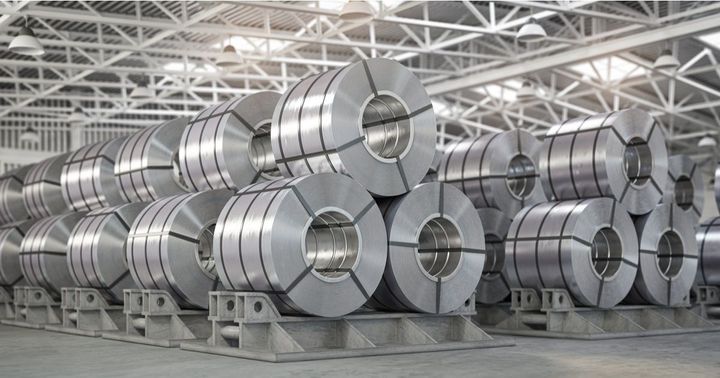
Stainless Steel Manufacturing Guide: Advanced Technology, Smart Production & Sustainable Trends
Stainless steel is an iron-based alloy containing sufficient chromium to develop a protective oxide layer that helps resist corrosion. Different grades also contain elements such as nickel, molybdenum, manganese, nitrogen, and carbon to achieve specific mechanical, thermal, and chemical properties.
The manufacturing process exists because industries need materials that can withstand moisture, chemicals, heat, pressure, and repeated use while maintaining structural and surface performance. Stainless steel is therefore used across many demanding environments.
Modern stainless steel production generally involves several connected stages:
- Raw material preparation and alloy selection
- Melting in an electric furnace
- Refining and chemical composition adjustment
- Casting into slabs, billets, or other semi-finished forms
- Hot and cold rolling
- Annealing and heat treatment
- Pickling or surface treatment
- Finishing, inspection, and dimensional testing
- Packaging and controlled distribution
Electric arc furnaces are widely associated with stainless steel production because stainless steel can incorporate significant quantities of recycled scrap. Recycling is an important part of the industry's material cycle because stainless steel retains its metallic value and can be repeatedly recycled.
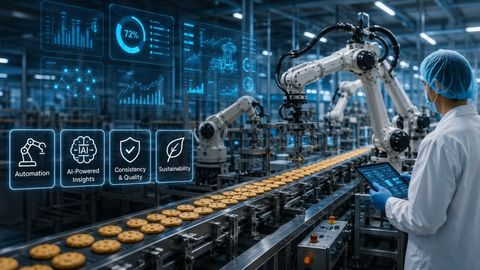
Production technology has also changed significantly. Sensors, automated controls, computer-based process monitoring, machine vision, and data analytics can now be integrated into manufacturing lines. These technologies help operators monitor temperature, pressure, thickness, surface quality, chemical composition, and equipment performance.
Why Stainless Steel Manufacturing Matters Today
Stainless steel manufacturing matters because the material supports many essential sectors. Construction projects use stainless steel for architectural components, infrastructure, roofing, structural applications, and interior systems. Food and beverage facilities use it where hygiene and corrosion resistance are important.
Other major applications include:
- Chemical and petrochemical processing
- Automotive and transportation equipment
- Medical and laboratory equipment
- Power generation
- Renewable energy infrastructure
- Water treatment systems
- Industrial machinery
- Kitchen and food-processing equipment
- Marine applications
- Energy storage and hydrogen-related equipment
One important advantage is durability. A material that remains functional for a long period can reduce the need for frequent replacement and maintenance. However, actual performance depends on grade selection, design, fabrication, operating conditions, and maintenance.
Manufacturers also need to balance several technical requirements. A product may need corrosion resistance, high strength, weldability, heat resistance, surface quality, dimensional accuracy, or resistance to particular chemicals.
For this reason, stainless steel manufacturing is closely connected with materials engineering and quality assurance.
Smart Manufacturing and Automation
Smart manufacturing is becoming increasingly relevant to stainless steel production. Industrial sensors can collect real-time information from furnaces, rolling mills, annealing lines, finishing equipment, and inspection systems.
Data analytics can help identify unusual operating conditions and support preventive maintenance. Automated inspection systems can detect surface imperfections that may be difficult to identify consistently through manual inspection alone.
Common digital technologies include:
- Industrial Internet of Things sensors
- Automated process control
- Machine vision
- Predictive maintenance systems
- Production dashboards
- Digital quality records
- Manufacturing data analytics
- Energy monitoring systems
- Automated material tracking
The objective is not simply to automate every task. The more useful approach is to combine automation with skilled human decision-making and reliable quality procedures.
Recent Developments and Industry Trends
The stainless steel industry continued to expand in 2025. World Stainless reported global stainless steel melt-shop production of approximately 64.2 million tonnes in 2025, representing a 2.1% increase from 2024. Asia accounted for approximately 55.3 million tonnes, while production in the United States increased by 7.6% compared with 2024.
This production environment is encouraging manufacturers to focus on productivity, process control, energy efficiency, and resilient raw-material management.
Another major trend is decarbonization. Steel producers are investigating renewable electricity, energy efficiency, green hydrogen, material efficiency, process improvements, and carbon-management technologies.
In India, the Ministry of Steel released its Green Steel Taxonomy in December 2024. The framework defines green steel using carbon-intensity thresholds and establishes three green-rating levels. The framework is intended to support the transition toward lower-carbon steel production.
India's steel-sector roadmap also identifies energy efficiency, renewable energy, green hydrogen, material efficiency, process transition, carbon capture, utilization and storage, and biochar among potential decarbonization pathways.
The government's 2025–26 annual report stated that, as of December 31, 2025, 58 steel units had received green-steel certification under the notified taxonomy, representing 9.1 million tonnes of certified production.
Hydrogen is another developing area. India has supported pilot projects investigating hydrogen use in steelmaking, although the technology is still developing and commercial-scale adoption depends on technical and economic factors.
Sustainability Trends in Stainless Steel Production
Sustainability increasingly involves the entire production system rather than a single machine or process.
Important areas include:
| Sustainability Area | Manufacturing Focus |
|---|---|
| Energy efficiency | Reduce energy consumption during melting, rolling, and heat treatment |
| Renewable electricity | Increase the use of lower-carbon electricity |
| Recycling | Increase effective use of stainless steel scrap |
| Process optimization | Reduce unnecessary material and energy losses |
| Water management | Improve water circulation and treatment |
| Emission monitoring | Measure and manage industrial emissions |
| Digital control | Use data to identify inefficient operating conditions |
These measures can complement one another. For example, better process monitoring can reduce rejects, while improved material efficiency can reduce unnecessary processing.
Laws, Standards, and Policies
Stainless steel manufacturing is affected by product standards, environmental regulations, workplace requirements, energy policies, and quality-control frameworks. Requirements vary according to the country, product category, application, and intended market.
In India, the Bureau of Indian Standards and the Ministry of Steel play important roles in product conformity and quality requirements. India's Steel and Steel Products Quality Control framework has been updated several times.
A significant recent development was the Stainless Steel Pipes and Tubes (Quality Control) Order, 2025, issued on February 10, 2025. The order requires covered products to conform to specified Indian Standards and bear the applicable Standard Mark under the relevant BIS conformity-assessment framework.
BIS reported that the order for specified stainless steel seamless and welded pipes and tubes came into force on August 1, 2025.
The Ministry of Steel also published further Quality Control Orders and amendments during 2026, including updates affecting steel and steel products and specific stainless steel flat-product requirements.
Environmental compliance may also involve emissions, water use, waste handling, hazardous materials, occupational safety, and energy efficiency. Manufacturers should therefore verify the latest requirements applicable to their plant, product, location, and industry sector rather than relying on a general overview.
Tools and Resources for Stainless Steel Manufacturing
Several categories of tools can support learning, planning, quality management, and production analysis.
Material and engineering tools
- Stainless steel grade-selection charts
- Alloy composition calculators
- Heat-treatment reference tables
- Corrosion-resistance guides
- Welding parameter references
- Mechanical-property databases
Manufacturing and quality tools
- Statistical process control templates
- Thickness measurement systems
- Surface inspection equipment
- Chemical composition analysis tools
- Dimensional inspection systems
- Production monitoring dashboards
Sustainability tools
- Energy consumption calculators
- Carbon-emission calculation templates
- Material-efficiency worksheets
- Water-use monitoring dashboards
- Recycling and scrap tracking tools
Learning resources
- Metallurgy textbooks
- Industrial standards databases
- Government manufacturing portals
- Technical training materials
- Engineering reference guides
- Standards and conformity-assessment documentation
These resources are most useful when combined with plant-specific measurements and qualified technical review.
Frequently Asked Questions
What is stainless steel manufacturing?
Stainless steel manufacturing is the process of producing corrosion-resistant steel alloys through melting, refining, casting, rolling, heat treatment, finishing, and quality inspection.
What are the main stages of stainless steel production?
Major stages include raw-material preparation, melting, refining, casting, hot rolling, heat treatment, cold rolling, finishing, inspection, and final processing.
Why is automation important in stainless steel manufacturing?
Automation can improve process consistency, monitoring, inspection, traceability, and equipment management. It can also provide operators with real-time information for production decisions.
Is stainless steel environmentally sustainable?
Stainless steel has strong recyclability and long-term durability, but its production is energy-intensive. Environmental performance depends on factors such as electricity sources, process efficiency, recycled content, emissions, and plant technology.
What standards apply to stainless steel products?
Requirements depend on the product and country. In India, certain stainless steel products are covered by BIS standards and Quality Control Orders. Manufacturers should check the current requirements for the specific product and application.
Conclusion
Stainless steel manufacturing is evolving from a conventional metal-production process into a more digitally connected and sustainability-focused industrial system. Advanced automation, real-time monitoring, machine vision, data analytics, recycling, energy efficiency, and lower-carbon technologies are becoming increasingly important.