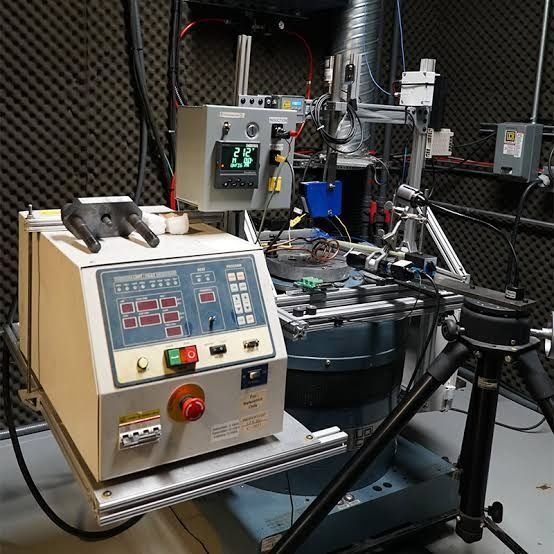
Vibration Testing Systems Explained: Testing Methods & Technologies
Vibration testing systems are important tools used to understand how products, components, and structures respond to mechanical movement. From automotive parts and aerospace equipment to electronics and industrial machinery, many products experience vibration during transportation, operation, or environmental exposure.
A vibration test recreates controlled mechanical movement so engineers can observe how an item behaves under specific conditions. The process can help identify weaknesses, resonance points, structural fatigue, loose connections, and other potential problems before they become more serious.
Modern vibration testing combines mechanical hardware, sensors, software, data acquisition equipment, and analytical techniques. These technologies allow testing teams to measure acceleration, displacement, frequency, velocity, and other characteristics.
The growing use of automation, electronics, electric vehicles, renewable energy equipment, and advanced manufacturing has increased the importance of reliable vibration analysis. Vibration testing systems now support product development, quality assurance, predictive maintenance, and engineering research across many industries.
Why Vibration Testing Systems Matter Today
Mechanical vibration can have a significant effect on product reliability. Continuous or repeated vibration may create fatigue, loosen fasteners, damage electronic connections, or contribute to structural failure.
Vibration testing provides a controlled way to study these effects. Instead of waiting for a product to experience real-world conditions, engineers can recreate selected vibration environments in a laboratory.
Key benefits include:
- Identifying structural weaknesses
- Evaluating product durability
- Studying resonance and natural frequencies
- Checking component performance
- Supporting product development
- Improving quality control processes
- Investigating unexpected failures
- Supporting predictive maintenance programs
- Evaluating transportation-related vibration
- Comparing different engineering designs
The technology affects manufacturers, researchers, automotive engineers, aerospace organizations, electronics developers, and industrial equipment operators.
For example, automotive components may experience vibration from engines, road surfaces, electric motors, and suspension systems. Aerospace equipment can encounter vibration during launch, flight, and landing. Electronic products may also be exposed to vibration during transportation or operation.
By reproducing these conditions in a controlled environment, engineers can collect measurable data and make informed design decisions.
Main Types of Vibration Testing
Different applications require different vibration testing approaches. The selected method depends on the product, expected environment, test objective, and applicable testing requirements.
Sine Vibration Testing
Sine testing uses a controlled sinusoidal waveform at selected frequencies. It is commonly used to identify resonance frequencies and evaluate how a product responds to specific vibration levels.
Engineers can gradually change frequency to determine where significant structural responses occur.
Random Vibration Testing
Random vibration contains energy across a range of frequencies. It is useful when a product experiences complex vibration environments rather than one predictable frequency.
Transportation, aerospace, automotive, and industrial applications can involve random vibration patterns.
Shock Testing
Shock testing examines how an object responds to sudden mechanical impacts. It is different from continuous vibration because the input is usually a short-duration event with significant acceleration.
This method can help evaluate structural robustness and the ability of equipment to withstand sudden impacts.
Resonance Testing
Resonance testing focuses on natural frequencies. When external vibration approaches a structure's natural frequency, the resulting response can become significantly larger.
Finding these frequencies can help engineers understand potential fatigue and structural problems.
Environmental Vibration Testing
Environmental testing attempts to reproduce vibration conditions that a product may experience during transportation, operation, or exposure to a particular environment.
The test profile can be developed from measured field data or applicable testing requirements.
Key Technologies Used in Vibration Testing
A modern vibration testing system typically combines several technologies.
The shaker system produces controlled mechanical movement. Electrodynamic and other shaker technologies can be selected according to frequency range, force requirements, and test configuration.
Accelerometers measure vibration acceleration. They are installed at selected locations on the test item or fixture and provide important information about the vibration response.
Data acquisition systems collect signals from sensors. The recorded information can then be processed and analyzed using specialized software.
Vibration controllers manage the test input. They monitor the measured response and adjust the shaker output to maintain the desired test profile.
Analysis software helps engineers examine frequency response, acceleration levels, resonance behavior, and other test characteristics.
The combination of these technologies allows testing teams to move from simple vibration measurements toward detailed structural analysis.
Vibration Testing System Comparison
| Testing Method | Main Purpose | Typical Input | Common Application |
|---|---|---|---|
| Sine Testing | Frequency response analysis | Sinusoidal | Component evaluation |
| Random Testing | Complex vibration simulation | Random waveform | Transportation and aerospace |
| Shock Testing | Impact response | Short-duration pulse | Durability testing |
| Resonance Testing | Natural frequency identification | Frequency sweep | Structural analysis |
| Environmental Testing | Real-world condition simulation | Recorded or defined profile | Product qualification |
Recent Vibration Testing Trends
During 2025 and 2026, vibration testing has continued to evolve alongside digital engineering, electrification, automation, and advanced manufacturing.
One important trend is the increased use of automated test control. Modern systems can continuously monitor sensor measurements and adjust test conditions according to predefined parameters. This can reduce manual intervention and improve repeatability.
Electric vehicle development is another major area influencing vibration analysis. Battery systems, electric motors, power electronics, and lightweight vehicle structures require detailed testing because their vibration characteristics can differ from conventional powertrain systems.
The growth of digital twins and simulation-based engineering is also changing how physical vibration tests are planned. Engineers can use simulation models to predict structural behavior before conducting physical tests. Physical test results can then be compared with simulation data to improve the model.
Data analytics and machine learning are increasingly being explored for vibration monitoring and fault detection. Instead of examining every signal manually, analytical systems can help identify unusual patterns and prioritize areas for further investigation.
Another developing trend is the integration of remote monitoring and connected sensors. Networked measurement devices can support continuous collection of vibration information from industrial equipment.
These developments do not eliminate the need for physical testing. Instead, simulation, measurement, automation, and data analysis increasingly work together as part of a broader engineering workflow.
Laws, Standards, and Policies
Vibration testing is influenced by technical standards, industry requirements, workplace rules, and product-specific regulations. The exact requirements depend on the country, industry, product category, and intended application.
International testing frameworks can define procedures for vibration, shock, environmental conditions, measurement methods, and equipment qualification. Engineers should identify the applicable standard before designing a test program.
For products used in transportation, aerospace, electronics, automotive manufacturing, or industrial environments, additional technical requirements may apply.
In India, manufacturers and laboratories may also need to consider applicable national standards, sector-specific requirements, environmental rules, and laboratory quality frameworks. Testing laboratories may follow recognized quality systems to support reliable and repeatable measurement practices.
Important considerations include:
- Selecting an appropriate testing standard
- Maintaining calibrated measurement equipment
- Recording test conditions accurately
- Protecting personnel during high-force testing
- Documenting test results
- Following applicable electrical and mechanical safety requirements
- Maintaining traceability of measurement data
Standards can change over time, so organizations should verify the current edition and applicability of any standard before conducting regulated or qualification testing.
Tools and Resources for Vibration Testing
Several types of tools can help users understand, plan, and analyze vibration testing.
Vibration Calculators
Online engineering calculators can help with basic relationships involving frequency, displacement, velocity, acceleration, and related parameters.
FFT Analysis Tools
Fast Fourier Transform tools convert time-domain vibration signals into frequency-domain information. This can make it easier to identify dominant frequencies and possible resonance behavior.
Data Acquisition Software
Measurement software collects and organizes information from accelerometers and other sensors.
Simulation Software
Finite element analysis and other engineering simulation tools can estimate structural responses before physical testing.
Test Profile Templates
Standardized templates can help organize test parameters, sensor locations, frequency ranges, acceleration levels, duration, and acceptance criteria.
Calibration Records
Accurate calibration documentation is important for maintaining confidence in measurement results.
Technical Standards Databases
Standards databases can help engineering teams identify appropriate vibration and environmental testing requirements for specific applications.
Frequently Asked Questions
What is a vibration testing system?
A vibration testing system is a collection of mechanical, electronic, sensing, control, and software technologies used to apply and measure controlled vibration on a product or component.
What are the main vibration testing methods?
Common methods include sine vibration, random vibration, shock testing, resonance testing, and environmental vibration testing. The appropriate method depends on the test objective and expected operating conditions.
Why are accelerometers used in vibration testing?
Accelerometers measure vibration acceleration at selected points. Their measurements help engineers understand how a component or structure responds to an applied vibration input.
What industries use vibration testing?
Vibration testing is widely used in automotive, aerospace, electronics, industrial machinery, transportation, energy, telecommunications, and manufacturing applications.
How does vibration testing improve product development?
Testing can reveal resonance, fatigue risks, structural weaknesses, and other response characteristics. Engineers can use these findings to refine designs and evaluate performance under controlled conditions.
Conclusion
Vibration testing systems provide a practical way to study how products and structures respond to mechanical movement. By combining vibration shakers, sensors, controllers, data acquisition equipment, and analytical software, engineers can recreate controlled conditions and evaluate product behavior.