Industrial Boilers Guide: Advanced Technology for Efficient Steam Generation
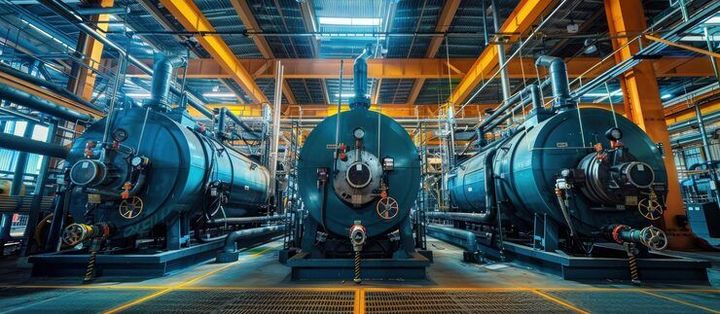
Industrial boilers are pressure vessels designed to heat water and produce steam or hot water for industrial processes. Steam can then be distributed through pipes to equipment that needs controlled heat or mechanical energy.
Industrial boilers are widely used in sectors such as food processing, chemicals, textiles, paper production, pharmaceuticals, refineries, power generation, and other manufacturing activities. Depending on the application, a boiler may operate with different fuels or energy sources, including natural gas, biomass, electricity, and other approved fuels.
The basic process is straightforward. A heat source transfers energy to water inside the boiler. As the water temperature rises, it can turn into steam. The steam is then delivered through a controlled distribution system to where it is required.
A typical industrial boiler system can include:
- Boiler pressure vessel
- Burner or heating system
- Feedwater system
- Economizer
- Superheater
- Steam drum
- Pumps and valves
- Water-treatment equipment
- Combustion controls
- Pressure and temperature sensors
- Safety and monitoring systems
Modern industrial boiler technology increasingly combines mechanical equipment with sensors, automated controls, digital monitoring, and energy-management systems. These technologies can help operators understand boiler performance and identify abnormal operating conditions.
Why Industrial Boiler Efficiency Matters Today
Industrial boilers are important because many manufacturing processes require large and continuous amounts of heat. Steam provides a practical way to transfer thermal energy across a facility.
Industries use steam for applications such as:
- Heating and drying
- Cooking and sterilization
- Chemical processing
- Textile production
- Paper manufacturing
- Food processing
- Distillation
- Cleaning processes
- Power generation
- Process heating
Boiler efficiency matters because energy losses can occur through exhaust gases, radiation, incomplete combustion, poor insulation, water blowdown, and inefficient steam distribution.
Improving boiler efficiency involves more than upgrading the main boiler. Feedwater temperature, combustion control, heat recovery, water quality, steam leaks, insulation, and operating practices can all influence overall performance.
Key Boiler Efficiency Technologies
Several technologies are commonly used to improve the performance of industrial steam systems.
Economizers:
Economizers recover heat from exhaust gases and transfer it to incoming feedwater. This reduces the amount of additional heat required to raise the water temperature.
Condensing heat recovery:
Where technically appropriate, additional heat can sometimes be recovered from exhaust gases and condensate.
Variable-speed drives:
These can regulate the speed of pumps and fans according to system demand, reducing unnecessary electrical consumption.
Automatic combustion control:
Sensors and control systems can continuously adjust combustion parameters to maintain appropriate operating conditions.
Steam condensate recovery:
Returning condensate to the boiler system can reduce the energy required to heat incoming water.
Insulation:
Proper insulation around steam pipes, valves, tanks, and other hot surfaces helps reduce heat loss.
Boiler Types and Their Industrial Applications
Industrial boilers are available in different configurations. The appropriate design depends on steam requirements, pressure, fuel characteristics, water quality, process conditions, and applicable regulations.
| Boiler Type | Common Characteristics | Typical Applications |
|---|---|---|
| Fire-tube boiler | Hot gases pass through tubes surrounded by water | General industrial heating |
| Water-tube boiler | Water circulates through tubes heated externally | Higher-pressure applications |
| Biomass boiler | Uses approved biomass fuels | Process heating and renewable-energy applications |
| Electric boiler | Uses electrical energy for heating | Specialized process applications |
| Waste-heat boiler | Recovers heat from another industrial process | Energy recovery |
| Package boiler | Factory-assembled integrated system | Manufacturing facilities |
| Once-through boiler | Water passes through heating sections without a conventional steam drum | Selected high-pressure applications |
The distinction between boiler types is important because each design has different operating characteristics, maintenance requirements, pressure capabilities, and control systems.
Recent Industrial Boiler Technology Updates
Industrial boiler technology has continued to develop during 2025 and 2026, particularly around energy efficiency, digital monitoring, alternative fuels, electrification, and emissions management.
In March 2025, India's Boilers Bill, 2024 was introduced in the Lok Sabha. The proposed legislation was intended to replace the century-old Boilers Act, 1923, while updating the regulatory framework and maintaining a strong focus on boiler safety.
By 2026, Indian government information also reflected implementation of the Boilers Act, 2025 and associated rules. For example, Rajasthan's official regulatory portal lists the Boilers Act, 2025 alongside 2025 rules covering boiler operation engineers, attendants, inspections, adjudication, appeals, and related areas.
In April 2026, the Indian government announced temporary extensions of certain boiler certificates for specified high-capacity boilers, subject to operating-parameter verification and external inspection. The advisory also encouraged diversification of industrial fuel use.
Internationally, industrial energy technology is also moving toward greater electrification and integration of technologies such as hydrogen and carbon-management systems. The International Energy Agency updated its energy technology classification in May 2026 to reflect developments including industrial-process electrification, hydrogen, batteries, and carbon capture.
These developments do not mean that one boiler technology is suitable for every facility. Industrial operators still need to evaluate operating conditions, available energy sources, process requirements, safety requirements, and environmental rules.
Digital Controls and Smart Boiler Monitoring
One of the major developments in modern industrial boiler systems is the increased use of digital monitoring.
Sensors can measure parameters such as:
- Steam pressure
- Water temperature
- Feedwater flow
- Fuel flow
- Oxygen levels
- Exhaust temperature
- Water level
- Combustion conditions
- Pump performance
A digital control system can collect these measurements and display operating information to authorized personnel.
Advanced monitoring can also support predictive maintenance by identifying unusual changes in operating parameters. However, digital monitoring should complement established safety procedures rather than replace physical inspections and legally required checks.
Laws, Regulations, and Boiler Safety in India
Boilers operate under strict safety requirements because they contain pressurized water and steam. Poor operation, inadequate inspection, or damaged pressure components can create serious hazards.
India's regulatory framework has historically included the Indian Boiler Regulations, 1950, which establish technical requirements relating to boiler construction and safety. The National Productivity Council also provides educational material covering Indian Boiler Regulations, boiler inspection, and boiler safety.
The Boilers Act, 2025 represents a more recent legislative framework. State authorities also publish rules and administrative requirements for boiler registration, inspection, operation, and related safety matters.
Industrial facilities should therefore verify requirements with the relevant national and state authorities before installing, modifying, or operating pressure equipment.
Important compliance areas can include:
- Boiler registration and inspection
- Pressure testing
- Safety-valve requirements
- Qualified personnel
- Operating procedures
- Maintenance records
- Accident reporting
- Periodic examination
- Applicable emissions requirements
- Workplace safety requirements
Regulatory requirements can vary according to equipment type, capacity, location, fuel, and industrial activity.
Energy Efficiency Programs and Industrial Boilers
Energy efficiency has become an important part of industrial policy in India.
The Bureau of Energy Efficiency reports that its Perform, Achieve and Trade (PAT) program covers energy-intensive industries. Its 2025 information reports 1,333 designated entities, coverage of 55% of total industrial energy consumption, and reported energy savings of 25.78 million tonnes of oil equivalent.
Not every boiler installation is automatically covered by every energy-efficiency program. Applicability depends on the facility, industrial sector, designated-entity status, and relevant regulations.
For organizations evaluating industrial energy efficiency, boiler performance should therefore be considered alongside the complete process-heating and steam-distribution system.
Tools and Resources for Boiler Planning and Learning
Several types of tools can help engineers, operators, students, and facility managers understand industrial boiler performance.
Useful resources include:
- Boiler efficiency calculators
- Steam property calculators
- Fuel-to-steam conversion worksheets
- Heat-balance spreadsheets
- Combustion analysis tools
- Steam trap inspection checklists
- Boiler maintenance templates
- Pressure and temperature monitoring dashboards
- Energy-management software
- Industrial safety training materials
- Boiler inspection checklists
- Government energy-efficiency portals
- Technical standards and engineering references
A useful calculation framework should consider fuel input, steam output, feedwater temperature, steam pressure, exhaust conditions, and other relevant operating parameters.
For learning purposes, users should also distinguish between theoretical boiler efficiency and actual plant performance. Real facilities may experience losses that are not visible in a simplified calculation.
Frequently Asked Questions
What is the main purpose of an industrial boiler?
An industrial boiler primarily produces steam or hot water for industrial heating and process applications. Steam can be distributed to multiple pieces of equipment within a facility.
What affects industrial boiler efficiency?
Efficiency can be affected by combustion quality, fuel characteristics, feedwater temperature, exhaust-gas temperature, insulation, blowdown, condensate recovery, steam losses, and operating conditions.
What is the difference between fire-tube and water-tube boilers?
In a fire-tube boiler, hot gases travel through tubes surrounded by water. In a water-tube boiler, water travels through tubes that are heated externally. Water-tube designs are commonly associated with higher-pressure applications.
Are industrial boilers regulated?
Yes. Industrial boilers are generally subject to safety and technical regulations because they contain pressurized fluids. In India, requirements include the Boilers Act, 2025 and applicable regulations and state-level rules.
Can renewable energy be used for steam generation?
Yes. Depending on the process and facility, technologies can include biomass boilers, electric boilers, solar-assisted systems, waste-heat recovery, and other lower-carbon heating approaches. The appropriate option depends on technical, environmental, and regulatory conditions.
Conclusion
Industrial boilers remain an important part of modern manufacturing because many industrial processes require dependable heat and steam. Advances in boiler efficiency, combustion control, heat recovery, digital monitoring, electrification, and alternative fuels are changing how steam-generation systems are designed and managed.