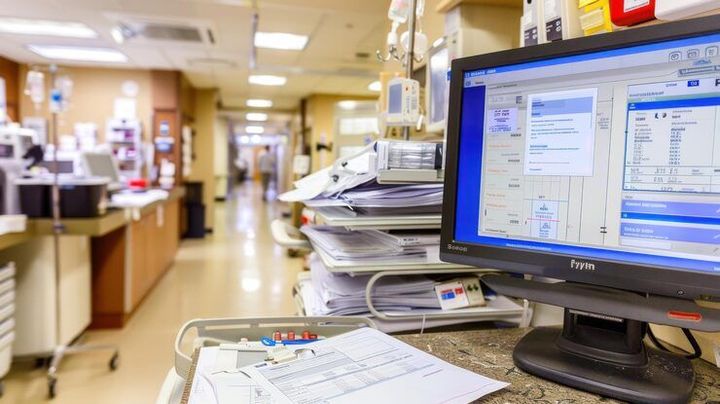
Medical Billing Machines for Efficient Healthcare Billing Management
Medical billing machines are increasingly connected with digital healthcare systems to organize billing records, patient information, claims, payments, and financial workflows more efficiently. Modern billing technology can reduce repetitive data entry, improve record accuracy, and support better coordination between administrative and clinical processes.
Medical billing machines refer to computer-based billing systems, specialized healthcare billing terminals, and integrated electronic platforms used to manage financial and administrative information within healthcare facilities. Unlike traditional paper-based billing, these systems can connect patient registration, treatment records, invoices, insurance information, payment records, and claims workflows.
The main purpose is to make healthcare billing more organized and easier to track. A typical system may collect patient details, record healthcare procedures, calculate applicable charges, generate billing documents, and maintain transaction histories.
The concept exists because healthcare billing involves many connected records. A hospital or clinic may need to coordinate information from registration desks, doctors, laboratories, pharmacies, insurance teams, and finance departments. Manual processes can make this information difficult to manage consistently.
Modern medical billing technology therefore focuses on digital workflows, data accuracy, automation, electronic health records, healthcare claims processing, and financial reporting.
| Billing Function | Digital Capability | Main Benefit |
|---|---|---|
| Patient registration | Electronic data entry | Organized records |
| Invoice generation | Automated calculations | Fewer manual errors |
| Claims processing | Digital documentation | Better workflow tracking |
| Payment records | Electronic transaction logs | Easier reconciliation |
| Reporting | Dashboard and reports | Better financial visibility |
Medical billing machines should not be confused with medical diagnostic equipment. Their primary role is administrative and financial rather than clinical.
Why Medical Billing Technology Matters Today
Healthcare organizations handle large volumes of information every day. As patient numbers and administrative requirements increase, efficient billing management becomes an important part of healthcare administration.
Digital medical billing systems can help staff maintain consistent records and reduce repetitive administrative work. They can also make it easier to identify missing information before a claim or invoice is processed.
Several groups can benefit from organized billing workflows:
- Hospitals managing large patient volumes
- Clinics handling outpatient billing
- Diagnostic laboratories managing test-related records
- Healthcare administrators monitoring financial activity
- Insurance teams reviewing healthcare claims
- Patients who need clear billing documentation
One important advantage is improved data organization. When billing information is stored electronically, authorized staff can search records instead of relying on physical documents.
Another benefit is workflow visibility. A digital system can show whether a bill has been generated, reviewed, submitted, adjusted, or completed. This can make administrative follow-up more structured.
Medical billing technology can also support healthcare revenue cycle management. Revenue cycle management involves activities from patient registration and eligibility verification through billing, claims processing, payment posting, and account reconciliation.
Automation can assist with repetitive activities, but human review remains important. Healthcare billing involves sensitive information, insurance rules, coding requirements, and patient-specific circumstances. Technology should therefore support trained personnel rather than replace appropriate oversight.
Recent Trends in Medical Billing Technology
Healthcare digitization has continued to develop rapidly during 2025 and 2026. In India, the Ayushman Bharat Digital Mission (ABDM) continues to promote an interoperable digital health ecosystem. The National Health Authority describes ABDM as a framework designed to connect different digital health systems and support standardized health information exchange.
A significant recent development is the updated Digital Health Incentive Scheme framework. The National Health Authority states that Corrigendum 7 applies from April 2026 through September 2026 and focuses on KYC-verified ABHA-linked health records, consent-based sharing, and ABDM v3 API compliance.
The updated framework also recognizes certain healthcare billing-related digital transactions. The NHA identifies payments for healthcare transactions and digitally submitted insurance claims among relevant transaction categories under the applicable scheme requirements.
Another important direction is interoperability. Rather than keeping billing information isolated in one application, modern healthcare technology increasingly aims to connect administrative systems with broader digital health infrastructure.
Artificial intelligence is also becoming relevant to medical billing workflows. Potential applications include identifying incomplete records, classifying documents, detecting unusual billing patterns, and assisting with administrative data review. However, automated systems require appropriate validation because healthcare billing decisions can have financial and regulatory consequences.
Cloud-based healthcare software is another growing trend. Cloud infrastructure can provide centralized access for authorized users across multiple departments, although organizations must carefully consider authentication, encryption, access controls, data retention, and regulatory obligations.
Laws, Policies, and Healthcare Billing Compliance in India
Medical billing systems in India operate within a broader healthcare, taxation, information technology, privacy, and digital health environment. The exact obligations depend on the healthcare organization, transaction type, technology architecture, and applicable laws.
The Ayushman Bharat Digital Mission is particularly relevant to digital healthcare interoperability. ABDM supports standardized digital health infrastructure and consent-based health information exchange. Participation in ABDM is described by the National Health Authority as voluntary for healthcare facilities, while existing healthcare laws and professional regulatory frameworks continue to apply.
Data privacy is another important consideration. Billing records may contain personally identifiable information and can be connected with sensitive healthcare information. Therefore, organizations should use appropriate access controls, authentication, secure storage, audit trails, and consent mechanisms where applicable.
The National Health Authority's ABDM framework emphasizes security, confidentiality, privacy, interoperability, and consent-based health information exchange.
Healthcare organizations should also monitor applicable taxation and accounting requirements for invoices and financial records. The exact treatment can differ depending on the nature of the healthcare activity and the organization's circumstances.
Insurance claims require additional attention. Digital claims workflows may involve patient identifiers, clinical documentation, treatment information, coding, authorization records, and supporting documents. Incorrect or incomplete information can create delays or require additional review.
Organizations implementing medical billing technology should therefore establish documented procedures for:
- Data access and user permissions
- Patient information protection
- Invoice and record retention
- Claims documentation
- Audit trails
- System backups
- Data correction procedures
- Staff authentication
- Software security assessments
- Regulatory monitoring
The rules surrounding digital healthcare continue to evolve, so organizations should review current requirements with qualified legal, compliance, accounting, and healthcare administration professionals.
Useful Tools and Resources for Medical Billing Management
Several categories of tools can support efficient healthcare billing management without relying on a single technology platform.
Electronic Health Record Systems:
These systems organize patient information and may connect clinical documentation with administrative workflows.
Hospital Management Information Systems:
HMIS platforms can combine registration, billing, appointments, clinical records, inventory, and reporting functions.
Medical Coding References:
Coding references help authorized billing and clinical teams understand applicable diagnosis and procedure classification systems.
Claims Management Tools:
Digital claims tools can help track claim preparation, submission, status, corrections, and supporting documentation.
Accounting and Reconciliation Tools:
Financial reporting and reconciliation applications can help compare billing records with payment transactions.
ABDM Resources:
India's ABDM ecosystem provides information about health facilities, healthcare professionals, digital health records, interoperability, and related technical frameworks. The NHA also provides resources for health technology integration.
Security and Audit Tools:
Access logs, authentication systems, vulnerability assessment tools, backup systems, and audit dashboards can support responsible management of healthcare information.
When selecting or evaluating a billing system, organizations should consider interoperability, security, scalability, usability, reporting, auditability, data backup, and compatibility with applicable healthcare workflows.
Frequently Asked Questions About Medical Billing Machines
What is a medical billing machine?
A medical billing machine is a digital computer-based system or specialized billing terminal used to manage healthcare billing information. It can support tasks such as patient registration, invoice generation, payment recording, claims documentation, and financial reporting.
How do medical billing systems improve healthcare administration?
They can organize billing information, reduce repetitive data entry, provide searchable records, and help staff monitor billing workflows. Automation can also support consistent calculations and documentation when properly configured.
Can medical billing technology connect with digital health systems?
Yes. Modern healthcare systems can be designed to exchange information with other authorized digital health systems through APIs and interoperability standards. India's ABDM initiative specifically aims to support interoperability among digital healthcare systems.
Is patient information protected in digital billing systems?
Protection depends on the system's technical and administrative controls. Healthcare organizations should use appropriate authentication, access permissions, encryption, audit trails, secure backups, and privacy procedures for sensitive information.
Are medical billing machines the same as electronic health records?
No. An electronic health record primarily focuses on a patient's clinical and health information, while medical billing technology focuses on administrative and financial workflows. Modern healthcare platforms can integrate both areas.
Conclusion
Medical billing machines have developed from basic electronic billing terminals into broader digital healthcare management systems. Their role now extends beyond invoice generation to include patient registration, claims administration, financial reporting, payment tracking, and connections with digital health infrastructure.